Who, why, how of civilisation
Civilisations decline when comfort replaces purpose, factions replace identity, imitation replaces creativity, privilege replaces merit, and entitlement replaces responsibility
Published September 15, 2026
Civilisations do not rise by accident, nor do they decline simply because their wealth diminishes or their armies lose a battle. Long before material decline becomes visible, something deeper begins to weaken: their understanding of who they are, why they exist and how they must organise themselves to fulfil their collective purpose.
The health of a civilisation can therefore be understood through three fundamental questions: Who are we? This is the question of identity. Why do we exist? This is the question of purpose. How will we achieve that purpose? This is the question of governance.
When the answers are clear, mutually reinforcing and widely shared, civilisations possess the confidence to create, the discipline to organise and the resilience to withstand adversity. When these answers become confused, contested or hollow, decline begins – even if the outward symbols of power remain intact.
A society may possess wealth, technology and military strength, yet remain merely a collection of individuals. It becomes a civilisation when it develops a higher identity rooted in a shared moral imagination: a common understanding of dignity, justice, knowledge, responsibility and the future it wishes to create beyond narrow and parochial interests.
Identity provides the foundation of that moral imagination. Purpose provides the compass. Governance converts identity and purpose into action. It determines whether ideals become institutions, talent is rewarded, justice is accessible, knowledge is cultivated, and public resources serve the common good. Governance is more than the machinery of government. It encompasses leadership, rule of law, social trust, education, institutional competence, civic responsibility and security.
Identity without purpose can degenerate into nostalgia, ethnicity, tribalism or resistance to change. It may glorify past achievements without producing new ones. Purpose without identity produces imitation: a nation may modernise materially while losing its confidence and cultural independence. Governance without either becomes the administration of a society that no longer understands its foundations or knows where it wishes to go.
But when identity, purpose and governance reinforce one another, they generate civilisational momentum. History repeatedly shows this relationship. The Roman Republic rose through a strong civic identity, citizenship and institutions that demanded public duty. As civic virtue weakened, inequality deepened, and power became personalised, those institutions were hollowed out. The empire retained its armies, roads and monuments, but its inner compact had begun to decay. The Chinese civilisation repeatedly renewed itself through cultural continuity, reverence for learning and a trained civil service. Dynasties rose and fell, but a strong identity and institutional memory survived political rupture. Europe’s scientific and industrial rise was about more than machines. The Renaissance restored intellectual confidence, the Enlightenment elevated inquiry, and universities and scientific societies converted ideas into capability.
The most profound example, however, remains the rise of Islamic civilisation. Islam transformed fragmented and frequently warring communities into an Ummah united by Tawhid. This identity transcended tribe, race, language and geography. It declared that human worth rested not on lineage, colour or wealth, but on character and righteousness.
Islam also gave the emerging civilisation a purpose: to establish social justice, seek knowledge, protect human dignity, cultivate the earth and serve humanity. Power became an Amanah, a sacred trust. Wealth carried social obligations and the pursuit of knowledge became a noble duty.
This purpose generated an extraordinary intellectual flowering. Muslims preserved earlier learning, but they did not remain mere translators. They questioned, tested and created, advancing mathematics, astronomy, medicine, optics, chemistry, physics, geography, law, architecture and commerce. Baghdad, Cordoba, Granada, Cairo, Damascus and Bukhara became great crossroads of knowledge. Knowledge was not disconnected from faith; it arose from a worldview that regarded reflection and inquiry as Quranic duties.
Decline began when political authority fragmented, a higher sense of identity weakened and tribal and sectarian divisions deepened. Intellectual inquiry narrowed and institutions stagnated. Inherited knowledge became an object of reverence rather than a platform for further inquiry and discovery. Muslims celebrated the achievements of the past but ceased to reproduce its spirit of curiosity, courage and institution-building.
Allama Muhammad Iqbal understood this civilisational crisis more deeply than most. His concept of Khudi was a call to consciousness – an awareness of one’s dignity, potential and responsibility before God. For Iqbal, renewal began with recovering an authentic identity: “Khudi ko kar buland itna ke har taqdeer se pehle,/Khuda bande se khud poochhe, bata teri raza kya hai”. He cautioned Muslims against judging themselves through the categories of another civilisation: “Apni millat par qiyas aqwam-e-Maghrib se na kar,/Khaas hai tarkeeb mein qaum-e-Rasool-e-Hashmi”.
Iqbal was not advocating isolation from the West or the rejection of modern knowledge. He was warning against intellectual dependency and cultural imitation. Learn from every civilisation, he urged, but do not borrow another people’s eyes with which to see yourself. He challenged Muslim youth to rediscover their place in history. Iqbal asks young Muslims to understand the intellectual and moral universe to which they belong and to recognise the distance between inherited potential and present performance.
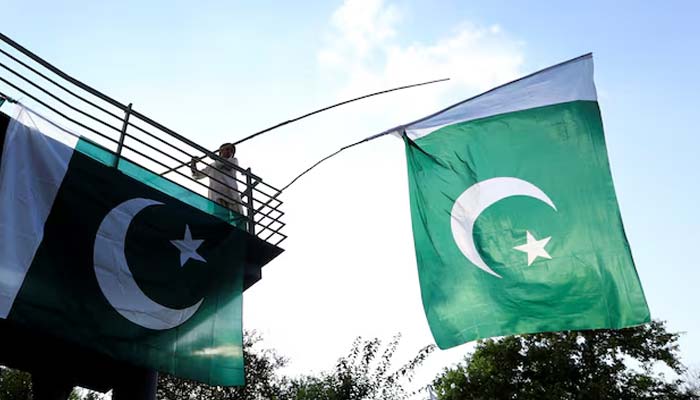
Identity, however, is only the beginning. Iqbal also defines a civilisational purpose: “Yeh nukta sarguzasht-e-millat-e-baiza se hai paida,/Ke aqwam-e-zameen-e-Asia ka pasban tu hai”. The message is one of leadership and responsibility, not domination. Pakistan’s purpose cannot be confined to protecting its borders or increasing its income. It must become a source of stability, knowledge, opportunity and cooperation in its region, and a constructive voice for justice in the world.
Iqbal then charts the ‘how’ – the values through which civilisational leadership must be earned: “Sabaq phir parh sadaqat ka, adalat ka, shuja’at ka,/Liya jayega tujh se kaam duniya ki imamat ka”. The sequence is crucial. Leadership is not claimed through slogans; it is earned through truth, justice and courage. Sadaqat requires integrity in personal conduct, public discourse and statecraft. Adalat demands equal citizenship, the rule of law and economic fairness. Shujaat requires the courage to reform failing institutions, confront vested interests, defend freedom and choose the long-term national interest over immediate convenience.
Iqbal thus answers all three questions. Identity tells us who we are. Purpose tells us what role we must play. Character, knowledge and just institutions show us how to fulfil it.
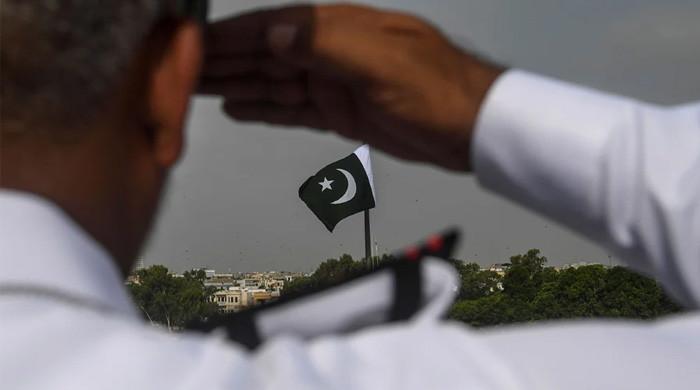
The Pakistan Movement itself demonstrates the power of this alignment. The Muslims of the Subcontinent first answered the question of identity: they were not merely a numerical minority, but a community with a distinctive history, moral outlook and political consciousness. They then answered the question of purpose: they sought a homeland in which they could live with dignity and translate the principles of freedom, justice and social welfare into collective life.
Finally, under Quaid-e-Azam Muhammad Ali Jinnah, they answered the question of method. They organised politically, mobilised democratically and pursued their objective through constitutional struggle. Pakistan’s creation was therefore not an accident of history but the result of a people knowing who they were, why they sought freedom and how they would achieve it.
Our present challenge is to restore that alignment for national transformation. Pakistan cannot define success as managing one crisis after another. Nor can a higher GDP alone constitute a national purpose. Economic growth is indispensable, but it is an instrument of civilisational progress, not its complete definition.
Our purpose must be to build a modern, knowledge-based, productive and just Islamic welfare society that unlocks the potential of every citizen and contributes meaningfully to humanity. Our Islamic heritage must provide the moral compass, our Pakistani identity the collective bond, and science, innovation and enterprise the instruments of progress.
URAAN Pakistan seeks to give practical expression to this ambition. Its goal of building a one-trillion-dollar economy is not simply the pursuit of a larger economic statistic. It seeks to rally the nation behind a shared destination: an export-led, knowledge-driven and inclusive economy that creates opportunities for young people, empowers women, reduces regional inequalities and makes Pakistan competitive in the world. Its five pillars – exports, enterprise and employment; a digital and knowledge-based Pakistan; environment, climate, food and water security; energy and infrastructure; and equity, ethics and empowerment – represent the ‘how’ of transformation.
The one-trillion-dollar aspiration must become a national mission, not merely a government target. The state cannot achieve it alone. It requires businesses that innovate, universities that solve national problems, civil servants who facilitate rather than obstruct, farmers who adopt modern practices, workers equipped with new skills, and young people who see themselves not as spectators but as builders of Pakistan’s future.
Iqbal places responsibility for civilisational renewal upon every citizen. No individual is insignificant, and no citizen is merely a passive recipient of history. The destiny of a civilisation is shaped by the character, choices and contributions of its people. Every honest worker, courageous reformer, creative entrepreneur, dedicated teacher, responsible public representative, public servant and socially conscious young person becomes an author of the nation’s future.
This is the spirit of URAAN Pakistan. The government must provide direction, capable institutions and an enabling environment, but every Pakistani must become a stakeholder in progress. Civilisations decline when comfort replaces purpose, factions replace identity, imitation replaces creativity, privilege replaces merit and entitlement replaces responsibility. Renewal begins when a new generation can answer three questions with conviction: Who are we? Why do we exist? How will we turn our purpose into reality?
The writer is the federal minister for planning, development, and special initiatives. He tweets/posts @betterpakistan and can be reached at: [email protected]
Disclaimer: The viewpoints expressed in this piece are the writer's own and don't necessarily reflect Geo.tv's editorial policy.
Originally published in The News