How to worsen a divide
Debate on new provinces has degenerated into provincial and ethnic chauvinism in recent days
Published September 08, 2026
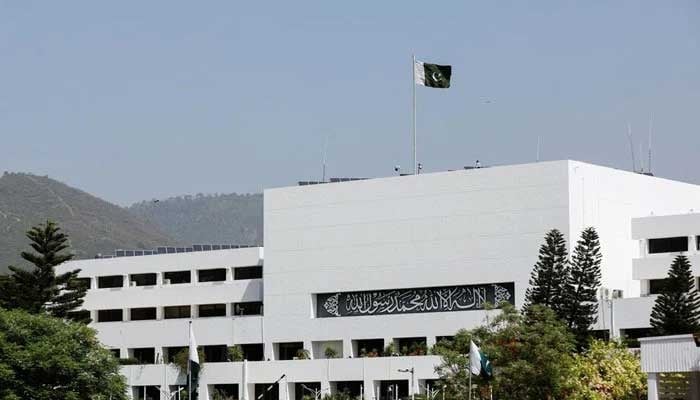
The debate on new provinces is being sold as a cure for a collapsed system. But it will not govern better; rather, it will divide more sharply.
A polarised federation does not become a developmental state by drawing new lines. It becomes a louder version of the same extractive state: more slogans, more patronage, less responsibility.
Whether Pakistan has four provinces or fourteen will not decide its future. The question is whether the elite will keep a state that lives off society or build one that invests in people and institutions. An extractive state taxes and borrows to sustain patronage and privilege. A developmental state values competence more than loyalty. That contest did not begin last month. What began last month is a blame game.
The 18th Amendment moved power to provincial capitals, at least in theory, and then stopped. Local government was never built. Those who have actually run the country have not delivered effective governance or a growing economy. Debt, weak investment, poor services and a security crisis on the periphery are not the fault of the number four. They are the record of a system that extracts more than it develops. When that record becomes hard to defend, the structure is blamed so that those who held it need not answer for it. Ministers who do not speak only for themselves float inevitability. Parties are invited to fight over the wreckage. That is a proxy argument. In a polarised country, it increases polarisation.
The grievances used to justify the quarrel are real. Distance from Lahore or Quetta is a daily cost. Southern Punjab’s gap is measurable. Hazara and Bahawalpur have older claims. Karachi’s failure is obvious. None of this justifies the formula now being sold: Pakistan has a quarter of a billion people and four provinces; India has 28 states; America has 50; therefore, multiply the units? Capable federations assign functions and money below the state. That is the work this state has refused to do.
There is still no plan, no serious analysis, no study. Interior Minister Mohsin Naqvi says new administrative units “will have to be created. No one can stop it” and that public opinion should decide. But who, exactly, does Mr Naqvi represent when he declares what ‘will have to be’ done? At the same time, talk of a 28th Amendment suggests that the proposed restructuring could require changes to the constitutional and fiscal arrangements governing the federation. Article 239 already requires a two-thirds majority in parliament and a two-thirds majority in the assembly of any province being divided. A referendum can test public sentiment. It cannot rewrite the federation.
To declare that the federal structure has collapsed while those who have dominated it remain in place is a red herring — a way of shifting attention from those responsible for the failure to the structure they failed to govern.
The fiscal backdrop makes that clearer. In the 2026-27 budget, the centre kept the 57.5 per cent NFC formula on paper, then froze the divisible pool at Rs13.35 trillion against a Rs15.26 trillion tax target and booked more than a trillion rupees back from the provinces as Article 164 grants. Petroleum levy remains outside the pool. New provinces would force that Award open and create new payrolls.
The last ten days show how quickly the debate has degenerated into provincial and ethnic chauvinism. On September 3, the Sindh Assembly, after a four-day debate on Nisar Khuhro’s motion, declared that “Sindh is one and shall remain one”. It rejected any scheme, “by whatever name”, to divide the province, alter its limits, create a new province, or place any part under separate federal arrangement. It cited Article 239(4). CM Murad Ali Shah said there would be “no compromise on Sindh’s geographical unity” and that Sindh’s future would not be decided by “businessmen from Lahore”. PPP members — 105 were present — stood with banners reading “Sindh Ji Dharti Munhinji Maa”: the land of Sindh is my mother.
The MQM-P and Jamaat-e-Islami walked out. The next day, MQM benches chanted “Sindhudesh na manzoor”, and the sitting collapsed. PPP Sindh then told Prime Minister Shehbaz Sharif to restrain federal ministers.
The history is not invented. The Sindh Assembly was the first provincial legislature to support Pakistan in 1943. One Unit remains a living memory. Using Sindh as a laboratory for new “units” is how a blame game becomes an ethnic one.
Punjab answered in the same register. On September 5, CM Maryam Nawaz said the threat to Punjab “comes less from my neighbouring countries and more from my neighbouring provinces”. Terrorism, she said, “enters Punjab from there”. The PTI’s Asad Qaiser called the remarks insulting to Khyber Pakhtunkhwa.
The security problem on Punjab’s edges is real. Naming other provinces as the source of contamination, in the same week the centre argues about new units, is Punjab speaking as a fortress. And this debate is supplying the polarisation.
Rana Sanaullah calls the debate premature. Ahsan Iqbal still floats 12-15 provinces or 160 district governments. Khawaja Asif accuses the PPP of softening on a Saraiki province in Punjab and reaching for Sindhudesh when the map moves south. He is not wrong about the contradiction. He is silent about his own party’s bills for Bahawalpur and South Punjab when the PML-N did not hold Lahore, and its caution now that Maryam does.
PPP senators still demand separation from ‘Takht-e-Lahore’. The same party’s Sindh leadership treats any new unit inside Sindh as sacrilege. Together, that is constituency arithmetic. The PTI built a South Punjab secretariat and put new provinces in its manifesto. It now asks why the prime minister is silent and insists on the constitutional requirement of a two-thirds majority.
The constitutional process is the right test. The MQM-P wants new administrative units, particularly for Karachi, but walked out of a resolution rejecting the division of Sindh. It cannot demand greater administrative autonomy for Karachi while pretending that dividing Sindh has no political consequences.
But what exactly is an ‘administrative unit’? Pakistan already has 34 divisions within its four provinces, plus the Islamabad Capital Territory. If the objective is better governance, why create another layer instead of giving the existing ones real powers? Fiscal devolution to divisions is a sane proposal: a predictable share of provincial revenues, functions commensurate with their size, and an elected executive accountable to voters rather than to Lahore or Karachi.
There is no obvious need for a new species of ‘administrative unit’. The phrase sounds modest, but leaves open the possibility of turning these units into provinces, with their own assemblies, bureaucracies and claims on the NFC Award. If service delivery is the problem, fund and empower the tier that already exists. If a region still has a compelling case for provincial status, use Article 239. Do not smuggle a new constitutional architecture into the system through a proxy argument about collapse.
New provinces would copy the extractive model at a smaller scale: another cabinet, secretariat, court and transfer. Pakistan cannot pay for the governments it has. The unfinished business of 2010 is Article 140-A. Provinces took power and refused to pass it down. That failure is real. A state that cannot grow the economy or deliver basic government should not redraw itself as a substitute for responsibility. Playing this as a blame game, through voices that are not only their own, is how polarisation is manufactured.
Pakistan does not need more governments. It needs the people who already hold power to stop recasting the federation when they cannot govern it.
The writer is former head of Citigroup’s emerging markets investments and author of ‘The Gathering Storm’.
Disclaimer: The viewpoints expressed in this piece are the writer's own and don't necessarily reflect Geo.tv's editorial policy.
Originally published in The News