Nighttime light exposure linked to early signs of heart dysfunction, study finds
'Light pollution has emerged as a new risk factor for cardiovascular disease' said study lead author, Dr Lu Qi
Published September 10, 2026
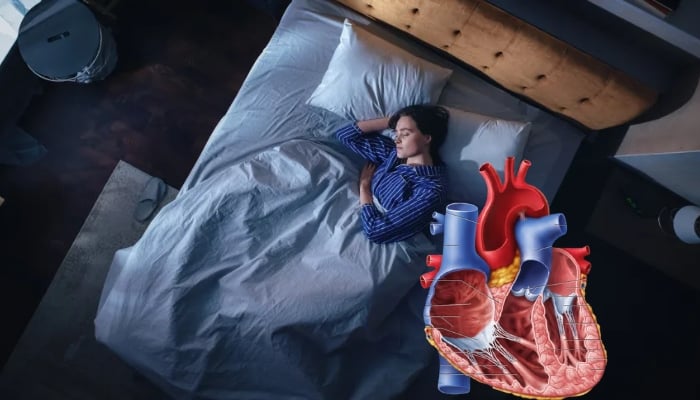
Nighttime light exposure may be linked to early signs of heart dysfunction during sleep, a new study has found.
The study findings were published in European Heart Journal, a leading cardiology journal, on Wednesday, September 9, 2026, and involved data from more than 11,000 people.
Even the smallest bit of light exposure during sleep at night may affect the structure and function of heart muscles, increasing the risk of potential heart dysfunction, the research shows.
For a quality of sleep, experts say the maximum ocular light exposure in a bedroom should ideally be 1 lux.
For the unversed, a lux is a measuring technique of illumination levels set by the International System of Units, and to compare with 3 lux which is equivalent to moonlight or light creeping in beneath a closed bedroom door.
“Light pollution has emerged as a new risk factor for cardiovascular disease,” said Dr Lu Qi, the study lead author and director of the Tulane University Obesity Research Centre in New Orleans, Louisiana.
“Our findings, together with evidence from other studies, suggest that reduction of nighttime light exposure should be considered as one of the potential strategies for preventing heart disease by clinicians and policy makers,” Qi added.
The study examined the sleep patterns of over 11,000 people without cardiovascular disease who were part of the UK Biobank study.
In the UK, it is considered the largest biomedical data bank that stores genetic and health data from 500,000 citizens residing in the United Kingdom.
The study researchers found the heart muscle walls of people exposed to more than 3 lux of light while asleep became thicker in certain respects that reduced the heart’s overall blood-pumping capacity.
The amount of damage increased as the bedroom illumination levels increased, as per the study findings.
The amount of extra light might include the light emitting from a smartphone, radiance from a digital alarm clock, or outdoor light pollution.
All study participants in the study wore a wrist sensor for a week to calculate light levels during the night.
Three years later, each person underwent a cardiovascular MRI to assess their heart structure and function.
The findings when compared with people with zero light exposure at night, sleeping in light levels above 3 lux, made the walls of the heart’s left ventricle thicker, narrowing the space inside.
The researchers also found a reduction in the heart muscle’s (myocardium, the main heart tissue that contracts and pumps blood) ability to flex during a heartbeat, a sign of heart dysfunction.