Climate governance whiplash
Climate governance whiplash is Pakistan's struggle between knowing and doing
Published July 25, 2026
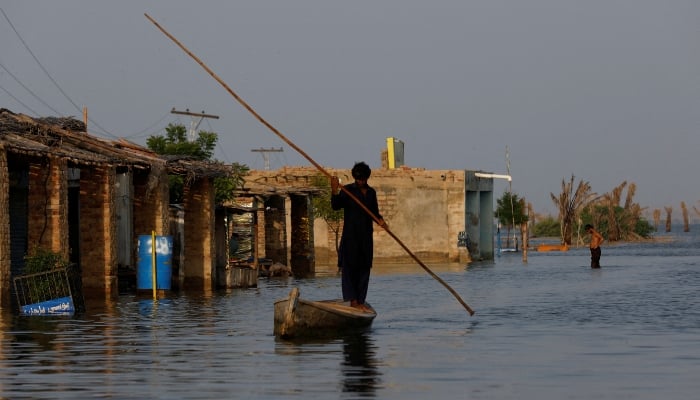
Pakistan has entered a phase of climate governance whiplash where extreme heat, intense rainfall, prolonged droughts, glacier instability and water insecurity are no longer isolated environmental challenges but interconnected threats shaping the country's economy, food security, public health and national stability.
Climate governance whiplash is Pakistan's struggle between knowing and doing, where climate risks are repeatedly recognised after every disaster, yet governance systems continue returning to business-as-usual once the immediate crisis passes. It is the gap between climate awareness and climate action, between policies and enforcement, and between recognising vulnerability and building resilience.
The country is witnessing climate extremes that were once considered rare, yet the most concerning aspect of this crisis is not the absence of warnings, but the persistent gap between what we know and how we govern.
After years of floods, heatwaves, droughts and climate-induced losses, Pakistan still finds itself asking the same questions every monsoon season: Why are floodplains still being encroached upon despite repeated evidence that these areas are natural buffers against flooding?
Why are ecologically sensitive zones, national parks, forests and wetlands, the very systems that provide climate protection, still being treated as spaces available for development rather than as critical climate infrastructure?
Why does Pakistan still not treat water security as a core national security priority despite increasing pressure on shared ecological resources, changing river dynamics and growing regional tensions over water?
Why are adaptation plans developed without first ensuring that institutions responsible for implementation have the technical capacity, expertise and enforcement mechanisms required to deliver them?
These are not questions about whether Pakistan understands climate change. Pakistan does understand climate change. The country has developed policies, strategies, frameworks and commitments. The real challenge is that climate governance remains disconnected from implementation realities. Because climate change is exposing the weaknesses of a governance system that continues to respond after disasters occur rather than reducing the risks that create disasters in the first place.
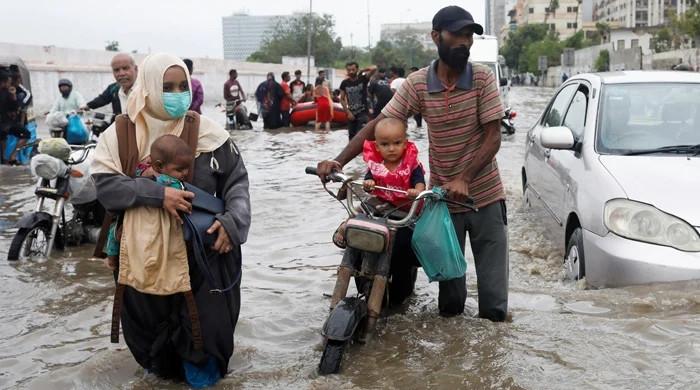
Pakistan's repeated flooding provides the clearest example. Floods are not disasters only because rainfall intensity has increased; floods become disasters because exposure and vulnerability continue to rise. When floodplains are occupied, natural drainage systems are disrupted, wetlands are degraded and development decisions ignore ecological realities, extreme rainfall events become catastrophic.
A country repeatedly affected by floods cannot continue allowing investments in areas that are scientifically recognised as high-risk zones. Floodplain management, land-use regulation and resettlement planning should have become national priorities after repeated disasters, yet the same vulnerabilities continue to be reproduced. Climate resilience cannot be built while simultaneously creating new climate risks.
The same governance failure is visible in Pakistan's mountain regions, where climate change is interacting with ecological degradation. During last year’s monsoon, the events in Buner and Swat demonstrated how fragile mountain ecosystems can amplify the impacts of extreme rainfall, flash floods and landslide-related hazards. Loss of forest cover reduces natural protection mechanisms, increases runoff and weakens the ability of landscapes to absorb climate shocks.
However, deforestation cannot be understood through a single lens as timber mafias and weak enforcement contribute to forest loss, but energy poverty is also a critical factor. The communities without access to reliable clean cooking alternatives continue depending on biomass, placing additional pressure on already fragile ecosystems. So, protecting forests requires more than enforcement against illegal cutting; rather, it requires addressing the social and economic realities that drive communities towards unsustainable practices.
Similarly, Pakistan's early warning systems continue facing a critical challenge as warnings are being issued, but risk behaviour is not changing. Repeated tourist incidents in vulnerable mountain areas demonstrate that communication of risk is still not translating into informed decisions. An early warning system cannot be considered successful merely because an alert was generated. Its success depends on whether communities, tourists and local institutions understand the warning, trust the information and change their actions accordingly.
This is where adaptation must move beyond technology and focus on governance, communication and behavioural change.
Pakistan's water challenge is perhaps the most strategic climate issue facing the country. Water is no longer only an agriculture or irrigation concern. In a region where shared ecological resources are increasingly sources of geopolitical tension, water security must be treated as a pillar of national security. Pakistan's dependence on the Indus Basin, accelerating glacial change, shifting precipitation patterns and increasing competition over water resources require a national approach that integrates climate science, diplomacy, agriculture, groundwater management and future demand.
Yet water security remains fragmented across institutions rather than being addressed through a comprehensive strategic framework. A country whose economy, food system and social stability depend on water cannot afford to treat water as a seasonal management issue.
The agriculture sector further demonstrates why Pakistan needs a shift from response to resilience. Climate impacts are already affecting agricultural productivity through heat stress, water uncertainty and changing rainfall patterns. However, the dominant response continues to focus on compensation through cash transfers after losses rather than preparing farmers before climate shocks occur.
Farmers need more than post-disaster financial assistance. They need climate-resilient crop planning, updated agro-climatic zones, improved water efficiency, stronger extension services and research-based solutions suited to Pakistan's changing climate. The challenge is not only recovering from climate disasters but transforming systems so that future losses are reduced.
Another fundamental weakness in Pakistan's climate governance is the disconnect between global climate discussions and local realities. International science and frameworks are valuable, but climate solutions cannot simply be imported without considering Pakistan's ecosystems, communities and institutional capacities. Policies designed without local scientific understanding and indigenous knowledge often fail because they do not reflect the complexity of the landscapes they aim to protect.
The same contradiction exists in our environmental priorities. Pakistan's waste crisis is reduced to a conversation about plastics, how much it is being consumed or produced, while rivers continue receiving untreated waste and sewage, waste segregation remains limited and open dumping continues. A plastic ban without a functioning waste management system is not a complete environmental solution. It addresses a visible symptom while ignoring the underlying structural governance failure.
Similarly, plantation campaigns cannot become a substitute for ecosystem restoration. Climate action requires scientifically planned restoration, native species selection, ecosystem-based approaches and long-term monitoring. Planting trees without ensuring their survival and ecological suitability is not resilience-building.
The issue is not the absence of policies but the absence of enforcement architecture. Pakistan's adaptation plans, climate policies, and environmental frameworks will remain ineffective if the institutions responsible for their implementation lack the technical expertise to enforce them.
The next three years should therefore not be focused on producing more documents. Pakistan already has many frameworks; the priority should be implementation, enforcement and measurable outcomes.
Every major climate plan must have clearly defined success indicators: how many communities have become flood resilient, how many vulnerable settlements have been protected or relocated, how many hectares of degraded ecosystems have been restored, how many cities have functional heat action plans, how much agricultural land has recovered and how effectively climate finance has reached vulnerable communities.
Most importantly, implementation institutions must be strengthened by including subject-matter experts and technical specialists who understand climate science, ecology, hydrology, agriculture and risk management. Line departments require continuous technical guidance to determine what needs to be prioritised, where interventions should occur and how implementation should be monitored.
Without technical expertise embedded within institutions, policies will remain documents rather than become action.
Climate, water and environmental systems are dynamic. Therefore, strategies cannot remain unchanged for decades. Plans must be periodically reviewed and revised, ideally every three years, based on emerging climate risks, new scientific evidence and implementation experiences. Otherwise, Pakistan will continue developing plans for yesterday's climate while facing tomorrow's risks.
The country does not need another cycle of committees, declarations and emergency responses. It needs a governance transformation where climate and water become national priorities, where scientific expertise guides implementation, where local realities shape solutions and where success is measured through outcomes rather than announcements.
Pakistan will continue to experience climate whiplash. The question is whether its governance systems will continue reacting to every shock or finally evolve to manage the reality that climate science has already predicted.
The writer is an environmental scientist and leads the ecological sustainability and circular economy programme at the Sustainable Development Policy Institute (SDPI), Islamabad.
Disclaimer: The viewpoints expressed in this piece are the writer's own and don't necessarily reflect Geo.tv's editorial policy.
Originally published in The News