No exit clause
Sixty-five years of hostility, three wars and a nuclear standoff could not break the logic that made IWT hold
Published July 18, 2026
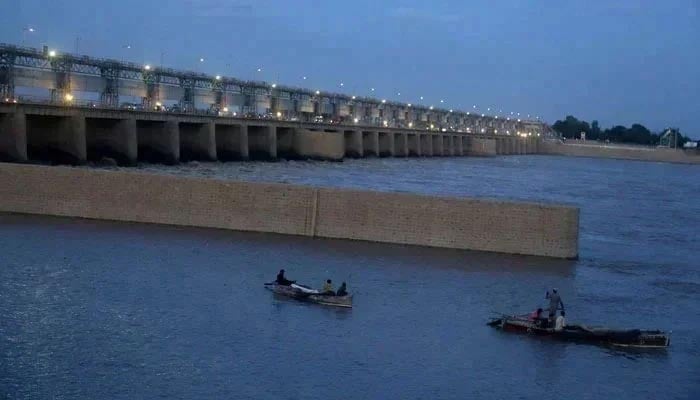
There is a kind of violence that leaves no crater and no casualty list, yet can starve a nation slower than any airstrike. It is happening on the Chenab, the Jhelum and the Indus, the rivers that keep Pakistan alive.
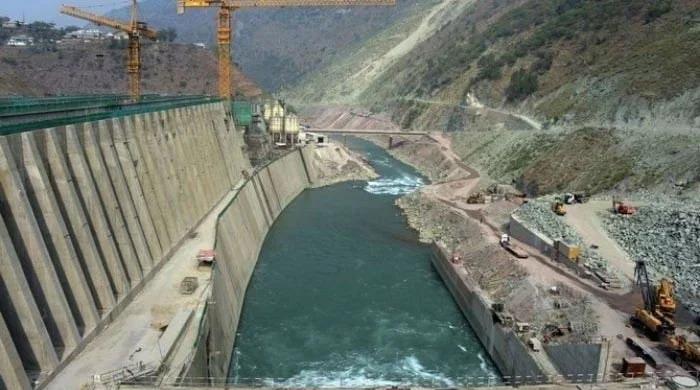
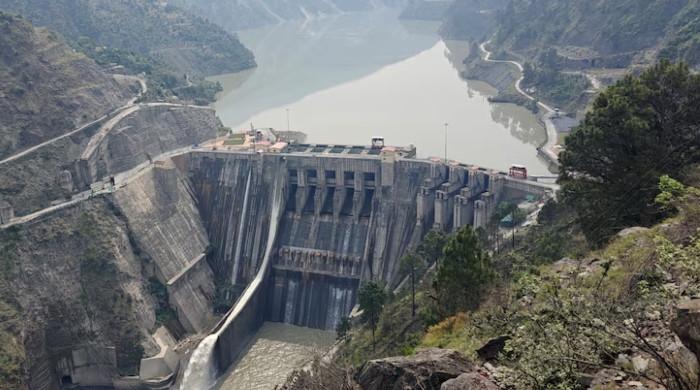
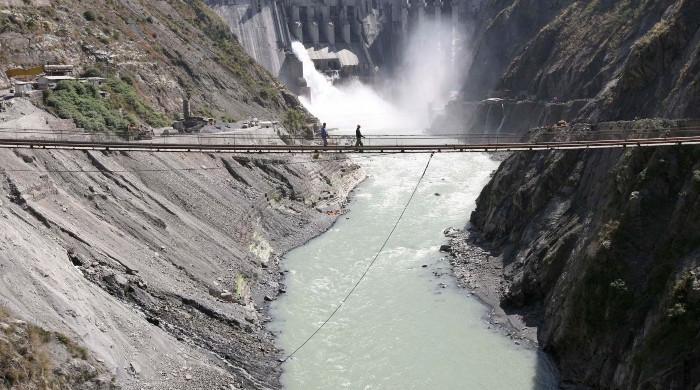
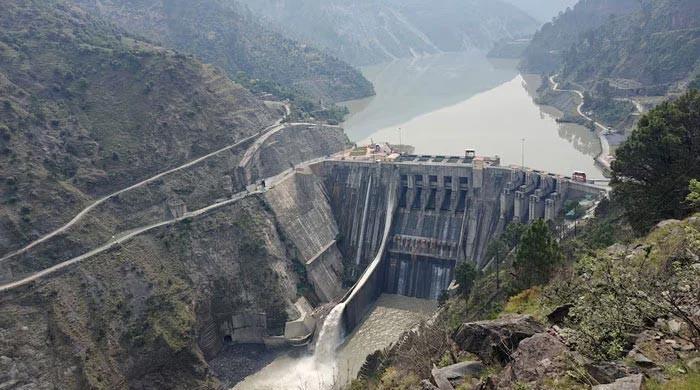
On April 23, 2025, a day after the Pahalgam attack, New Delhi announced it was placing the 1960 Indus Waters Treaty "in abeyance”. Fifteen months later the treaty remains frozen, India’s home minister has vowed it will never be restored, and Pakistan’s farmers watch their fields turn to dust on a schedule set by switches on Indian dams, not monsoons.
The treaty has no provision for suspension. Article XII is unambiguous: it can be modified or terminated only by mutual agreement, ratified by both governments. There is no unilateral off ramp, which is precisely why the pact survived the wars of 1965, 1971 and Kargil. The word ‘abeyance’ appears nowhere in its text; it is a term New Delhi invented to describe an act the document does not permit. When Pakistan took the matter to the Court of Arbitration at The Hague, the 2025 supplemental award affirmed the treaty remains in legal force and its dispute resolution mechanisms are still binding. India rejected the tribunal’s jurisdiction and refused to appear.
There is a second legal failure Indian officials rarely address. International law does recognise a doctrine of treaty suspension for changed circumstances, codified in Article 62 of the Vienna Convention on the Law of Treaties and long treated as customary international law. But that doctrine has never been available on demand. It requires a change so fundamental that it transforms the very basis on which the parties consented, and even then Article 65 requires formal written notification, stated reasons, and time for the other party to object before any suspension can take legal effect.
India invoked neither provision. It did not notify Pakistan through the treaty’s own procedures, did not observe any objection period, and has never formally pleaded changed circumstances before a tribunal, because the claim would not survive scrutiny. What India did was simpler and less defensible. It announced, and hoped the law would not catch up.
There is a further dimension that has gone strangely unremarked, even in our own commentary. The World Bank is not a bystander here. It is a named party to the 1960 agreement. When India moved to hold the treaty in abeyance, it did not even inform the Bank beforehand. An institution that spent a decade brokering this settlement, and holds it up as the model for other divided river basins from the Nile to the Mekong, was simply told afterward that one signatory no longer considered itself bound. If the Bank’s own flagship water treaty can be discarded this quietly, every other river agreement it promotes globally is weaker for it.
The numbers explain why this matters. Roughly 90% of Pakistan’s population lives within the Indus Basin. The system irrigates about four-fifths of the country’s farmland and generates virtually all of its hydroelectric power. Agriculture accounts for roughly a third of GDP and employs nearly half the workforce, a load-bearing pillar of an economy already inside an IMF bailout programme.
Nor is the pressure theoretical. In May 2025, as India began filling the Pakal Dul, Baglihar and Salal reservoirs without notice, Chenab flows at Marala collapsed from roughly 35,000 to just 3,100 cusecs in a single day. In December 2025, irrigation authorities documented another unexplained reduction over a full week, coinciding with satellite imagery of India’s Baglihar reservoir emptying and refilling, which Islamabad says is barred under the treaty’s rules on dead storage.
Twice in eight months, without the data sharing the treaty requires, and both times as the growing season demanded predictability most. That is not coincidence. That is a pattern, and patterns are exactly what treaties exist to prevent.
India’s own officials have removed any doubt about intent. Home Minister Amit Shah has said the treaty will never be restored and that Pakistan will be starved of water it has been getting unjustifiably. Water Resources Minister C R Patil has said New Delhi is working to ensure Pakistan does not get a single drop of Indus water in the years ahead, acting on the explicit direction of the prime minister. This is no longer a security dispute litigated through water; water itself has become the stated objective.
Consider the storage math that makes all of this so dangerous. Roughly 85% of Pakistan’s annual river flow arrives within three or four months of the year, and the country survives the rest of the year on stored water and disciplined releases planned well in advance. Yet Pakistan can store barely thirty days of water in the Indus system, against a global benchmark of one hundred and twenty days. A basin that runs on that thin a margin cannot absorb sudden, unannounced upstream manipulation without real consequences reaching the farm gate.
Pakistan’s leadership across the political divide has recognised the gravity of this moment. Prime Minister Shehbaz Sharif has ordered faster dam construction and opened provincial talks on storage. PPP Chairman Bilawal Bhutto Zardari has warned Pakistan will secure all six rivers if water is not shared fairly, framing the choice in the starkest terms: either blood flows or water does. President Asif Ali Zardari has called this a deliberate weaponisation of shared water resources. Whatever divides our parties, on this there is no daylight between them.
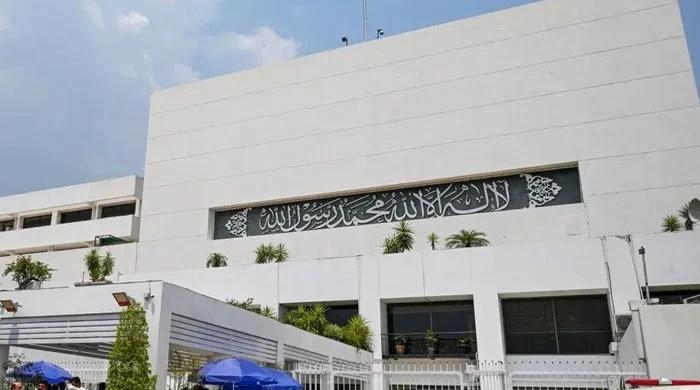
That unity must translate into strategy, not just statements. Pakistan must fight this on every forum available: legally, building an unbroken evidentiary record of every anomalous flow reading at Marala and Kotri and returning to arbitration each time; diplomatically, through the UNSC, General Assembly and every bilateral relationship where river security is a shared interest, not a South Asian curiosity; and constitutionally, by ensuring no future government, under any pressure, can quietly accept a redrawn status quo without the sanction of this Parliament.
Sixty-five years of hostility, three wars and a nuclear standoff could not break the logic that made the Indus Waters Treaty hold. It should not be allowed to die now, and it should certainly not be allowed to die because one party decided the law no longer applied to it.
The writer is a member of the National Assembly. She holds a PhD in Law, and serves on the National Assembly’s Special Committee on Kashmir.
Disclaimer: The viewpoints expressed in this piece are the writer's own and don't necessarily reflect Geo.tv's editorial policy.
Originally published in The News