From hashtags to streets: How Gen Z is redefining protest politics
A new political technology, not just a new generation of the angry
Published July 25, 2026
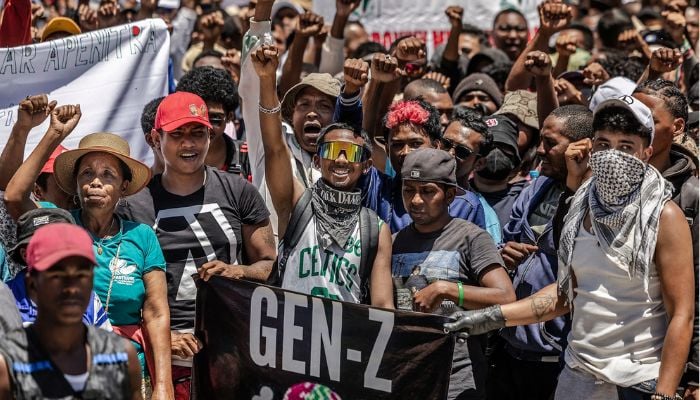
Over the past two years, a distinct pattern has emerged across continents in which young people organised largely online poured into the streets to confront governments over corruption, inequality, and broken public services. From Kathmandu to Rabat, Nairobi to Jakarta, and now New Delhi, Gen Z have held governments answerable.
The most distinct element of these protests is the distinguishing operating system for confronting power. Three core components have been seen in common in these protests that no earlier protest movement had access to at this scale. These foundational elements are a real-time public audit of elite behaviour, organising structures engineered to have no leader at all, and a shared symbolic language that requires no shared ideology to travel across borders. When combined, they have compressed the distance between private online grievance and a toppled government to a matter of days. That compression, not the anger itself, is what’s actually new.
One of the most prominent cases was Nepal. Nepal shows just how fast a bad policy decision can snowball. In September 2025, the government blocked dozens of social media platforms, apparently trying to shut down young users who'd been mocking politicians' children referred to as “nepo kids” online. The backlash was swift and lethal. More than 70 people died in the unrest that followed, and Prime Minister K.P. Sharma Oli was gone within days.
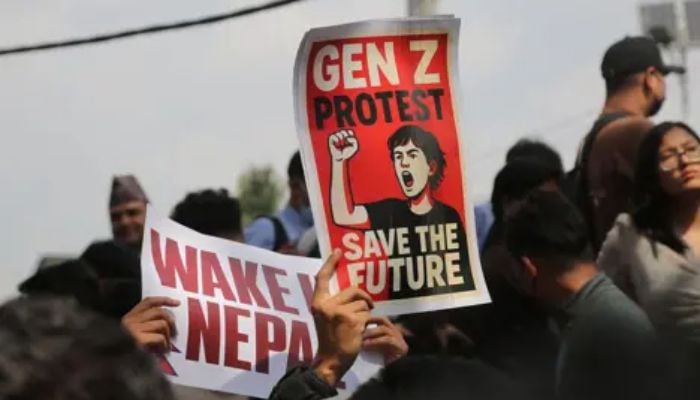
What stood out wasn't just that he resigned, but what happened next: protesters actually used Discord to help pick an interim leader, filling the political vacuum through what amounted to digital-native governance. Parliament was dissolved, and elections were set for 2026, cementing Nepal's place as a landmark in this wave of unrest.
This is a structurally different ignition point from older protest politics. It doesn't require organisers to build a case for why the system is unjust; the system incriminates itself in real time, on camera, and the movement's job is simply to circulate the footage faster than it can be buried. That's why the “trigger events” across this wave look almost trivially small from the outside.
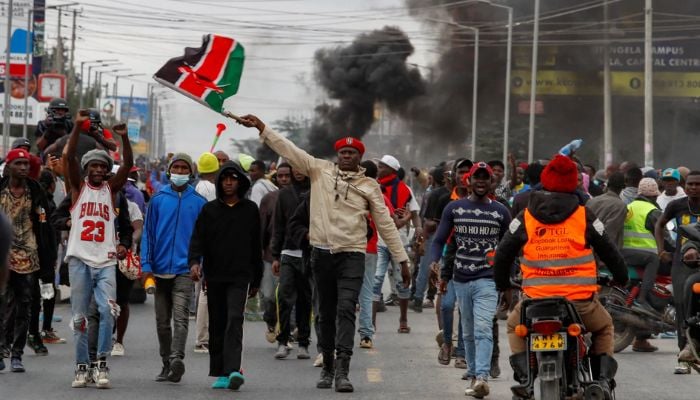
In Kenya, the trigger was fiscal: a 2024 finance bill that would have raised taxes on everyday goods drew sustained youth mobilisation until the legislation was withdrawn. Gen Z mobilised hard enough that the bill got pulled. Nobody was really running the show; there was no single leader or party behind it, which turned out to be a recurring feature of these movements rather than a one-off.
Indonesia went through something similar in 2025. A steep rise in lawmakers' housing allowances set things off, but it fed into wider anger over police brutality and a stagnant economy. Protesters went after government buildings and officials' homes directly. By year's end, the cabinet had been reshuffled, and some of the more contested policies were walked back, indicating not a total victory, but a real one.
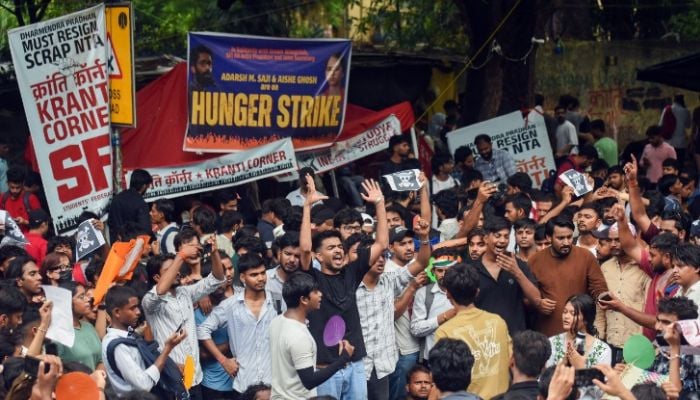
India in June 2026 offers the clearest recent test of that theory. Thousands gathered at Delhi's Jantar Mantar not around one scandal but around a pattern: repeated leaks in national eligibility cum entrance test (NEET), stacking on top of long-running complaints about democratic backsliding. What forced people into the street was the years of individually forgettable failures, catalogued by the same audiences who track them online, arriving at a threshold together. That such a mobilisation can reach real scale without one decisive scandal shows the audit mechanism doesn't require a crisis severe enough to end a government; it only needs enough documented failures to make the pattern impossible to unsee.
The second redefinition is structural, and it's easy to mistake for an accident of the internet age rather than a deliberate strategy. Kenya's 2024 anti-tax mobilisation had no identifiable leader to negotiate with or arrest. Morocco's GenZ 212 collective, which swelled from roughly 3,000 to more than 150,000 members on Discord in a matter of weeks, has never named a spokesperson. In Nepal, when the government fell, protesters didn't crown a replacement through a party congress or a coalition of elders; they effectively crowdsourced the decision through the same chat servers used to organise the marches.
This isn't disorganisation; it's a countermeasure. Every prior generation's mass movements had a soft target built into their design: a Martin Luther King to assassinate, a Lech Wałęsa to imprison, an Aung San Suu Kyi to place under house arrest. Remove the leader, and the state could often stall or fracture the movement. Gen Z-led protests have engineered that vulnerability out of the system entirely. When crackdowns hit Indonesia, Madagascar, and Nepal, there was no figurehead whose arrest could end things; repression had nothing to decapitate, and in each case, it appears to have intensified the protests rather than dissolved them. That is a genuine innovation in protest architecture, not merely a byproduct of having smartphones.
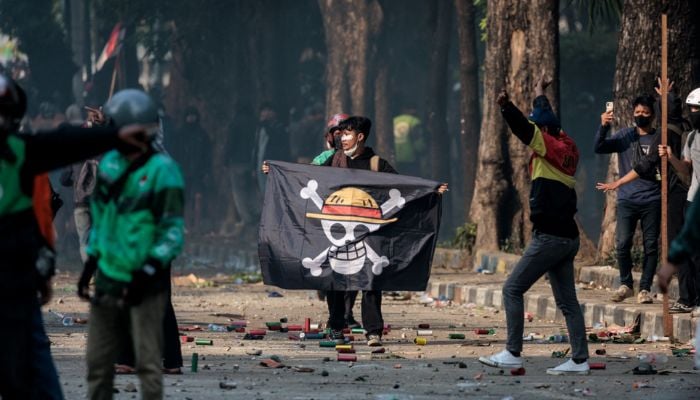
The third shift is the strangest, and possibly the most consequential: this generation has replaced shared ideology with shared fandom as the connective tissue of transnational solidarity. The Jolly Roger flag from the manga "One Piece," first raised at in Indonesia in 2023, has since appeared at demonstrations in Nepal, Madagascar, the Philippines, Peru, and Bulgaria, alongside borrowed gestures like the three-finger salute from "The Hunger Games." None of these symbols requires translation, party affiliation, or agreement on political theory.
Earlier internationalist movements had to do the much harder work of exporting an ideology such as socialism, Pan-Africanism, human-rights liberalism, for solidarity to travel. Gen Z has effectively outsourced that job to entertainment culture, which was already global before the protests were. That's not a superficial detail; it's an infrastructure decision, and it explains why this wave has spread faster and wider, across more dissimilar political systems, than almost any protest movement before it.India's contribution to this symbolic toolkit is its own case study in how deliberately this generation brands itself. Indian students adopted the cockroach as its emblem, reclaiming an insult after a high-profile judicial remark compared young, unemployed activists to cockroaches.
Put these three innovations together: an audit mechanism that manufactures its own evidence, a structure immune to decapitation, and a symbolic language that crosses borders without translation, and you get a genuinely new kind of political actor: one that can dismantle illegitimate authority with startling speed, in Bangladesh in weeks, in Nepal in days, in Madagascar almost overnight.
However, what this new model has not yet solved is what happens in the silence after the government falls, precisely because the same leaderlessness that makes these movements nearly impossible to suppress also makes them difficult to convert into an ongoing negotiating partner or a governing coalition. That is a real cost, and an unresolved one.
The countries where these movements have "succeeded", such as Bulgaria, Nepal, Madagascar, and Bangladesh, had comparatively more stable or better governed aftermath than the ones where protests failed outright, like Cameroon or Tanzania.
That is the uncomfortable finding sitting underneath of this moment. Toppling a government has become measurably easier for a leaderless, digitally native movement to accomplish than replacing it with something more accountable. Bangladesh's interim government and Nepal's dissolved parliament are both, in different ways, live experiments in what happens after the crowd goes home.
Gen Z has already proven it can dismantle illegitimate power faster than any generation before it. The open question, the one nobody protesting in these squares has yet answered, is whether it can build anything to replace it.