What is exomoon? Astronomers find first moon ever outside our solar system
Scientists sport Jupiter-sized exomoon orbiting a brown dwarf
Published July 24, 2026
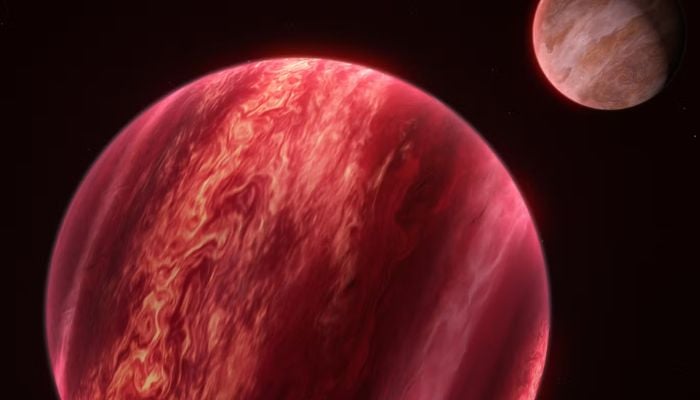
Astronomers have detected what could be the first exomoon, but the discovery is raising more questions than answers about how we define celestial objects.
An exomoon is a natural moon that orbits a planet or another body outside our solar system. The term exomoon is short for extrasolar moon, meaning a moon found beyond our solar system. They are generally small and far away, though telescopes look for dips in starlight.
The term exomoon isn’t straightforward, as the object doesn’t orbit a planet; it orbits a brown dwarf also known as a “failed star.” A brown dwarf is too massive to be a planet but too small to ignite fusion.
They have used the radial velocity method for identifying the wobbling of the brown dwarf, which is due to the orbiting body. This radial velocity method was actually used when the first exoplanet was discovered in 1995. The exosatellite has a mass of about 0.9 Jupiter masses and takes 170 days to complete one revolution.
The research’s co-author Alice Zurlo asserted that there’s a clear distinction between the planets and the Sun in the Solar System, so defining things like moons is simple.
“In the CD-35 2722 system, where we are blurring the lines between stars, planets, and moons, the whole thing becomes more complicated to describe,” she added.
Though we have over 6,000 planets confirmed outside our solar system, no exomoon has ever been found. Though this is not an exomoon in the traditional sense, it is certainly a discovery that challenges our definitions and shows us how little we can really put in a box.
The Extremely Large Telescope, which will be operational by 2030, can help in confirming this discovery and making similar discoveries.