The missing tier in governance
Parties are confined to a province or even to an ethnic group within province; this tendency reflects evolution of our political structure
Published June 23, 2026
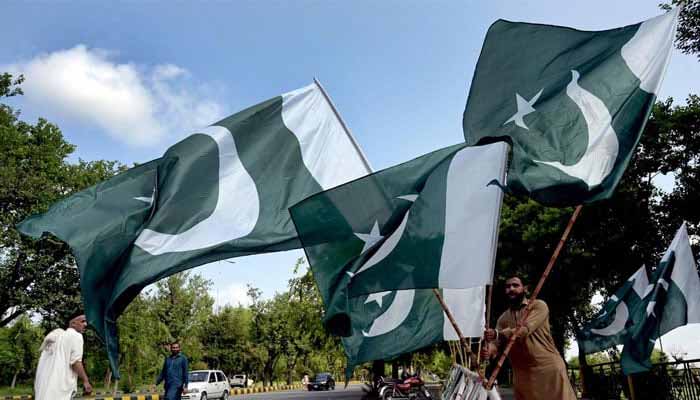
The three largest parties in Pakistan each govern a province; for two, their entire support comes from a part of that province, and for the third, its most ardent support comes from the province it governs.
Except for the current main opposition party, which for now is more federal, we have seen that parties are generally confined to a province or even to an ethnic group within a province. This tendency reflects the evolution of our political structure.
Over the past few decades, we have seen that the voting preferences of people living in, say, Hazara differ from those of people living elsewhere in Khyber Pakhtunkhwa. In Balochistan, Baloch and Pashtuns have quite dissimilar voting preferences. In Sindh, there is an urban-rural political divide.
In Punjab, there are distinct voting patterns in the western and southern areas compared to the central heartland. Given the influence of the rich and powerful on our policy, one would think that politics here should be a debate between the haves and the have-nots. But we generally tend to indulge in nationalist or ethnic politics more.
One reason is that our political structure forces previously federal parties, over time, to become confined to a small area or group, as long as that group is large enough to maintain its ascendancy in a particular province. The political scientist William Riker referred to this as a tendency towards building a minimum winning coalition. If the smallest possible winning coalition controls all the resources of a province, it can provide the most to its members while excluding those outside the coalition.
The confinement of parties to an area or ethnicity means that each party focuses exclusively on the priorities of its vote bank and meaningful national reforms, which would uplift all Pakistanis, never take place.
Compounding this tendency is the fact that our parties are family- or personality-based and they want to keep power within the family. And since their political power is provincial, they want to concentrate power in the provinces and avoid devolving power to the local levels.
Thus, we have seen that parties that consider provincial autonomy as sacrosanct don’t want to create autonomous local governments. They consider local government not the most important tier for achieving federalism, but a threat to be avoided at all costs.
These political parties also consider the NFC Award sacred but are loath to devolve resources to the local level; today, not a single province has a Provincial Finance Commission award for the equitable funding of local governments.
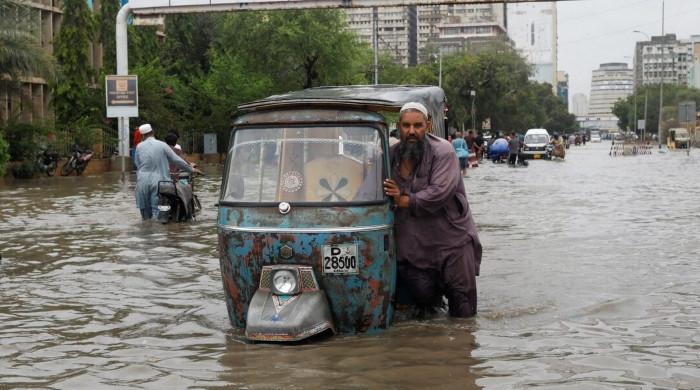
Unfortunately, what we have observed over the last two decades is that dismantling the third tier of government, the one that provides civic services and with which citizens interact every day, has rendered our governance ineffective and inequitable.
In its 2025/26 Annual Development Plan, Punjab allocated Rs13,240 per citizen for Lahore (already its richest city) but allocated only Rs460 per citizen of Lodhran, one of its poorest areas. About 30% of Punjab’s population, living mostly in the southern and western parts, received only 8% of ADP spending. This neglect of poorer areas is perhaps why over 300 kids were infected with HIV in a government hospital in Taunsa.
In Sindh, where exactly the government spends its money remains a mystery. After 17 years of the current government, the citizens of Sindh are no wiser about the government’s development priorities than when the government took power. Urban dwellers think the money is spent on rural areas, while rural areas remain devastatingly poor and keep waiting for their turn. Their turn never comes. It is fair to say that the entire province, but especially Karachi, suffers from active negligence.
It is important to note that the story of underdevelopment, misallocation of resources, lack of focus on education and health, and corruption in zoning, building control, police and contracts, etc, is the same, to varying degrees, across all four provinces.
Our smaller provinces also have citizens who feel alienated from the state. This can only be countered with greater local empowerment. This is why local government reforms are way past due, yet most political parties don’t want to let go of power from family hands. It is therefore heartening that local government empowerment is finally on the agenda and that political parties may be dragged towards a constitutionally funded and legally protected local government system.
As we provide constitutional protection to local governments, we need to rectify some mistakes made during the commendable steps towards autonomous local government of the Musharraf era. For instance, we need to have not just directly elected union council chairmen but also directly elected tehsil and district nazims and division mayors. This will open up political space and new people can rise and run directly for a nazim or a mayor post without necessarily having a political party to back them.
The indirect election of mayors, in which candidates need the support of a majority of their fellow council members, forces everyone to join existing parties, perpetuating a cycle of family dominance in politics. This is why we have seen no new leadership emerge in Sindh since 1970 and, with one exception, in Punjab since 1985. And that one exception, with continuous support from powerful quarters over a decade, proves the rule: how closed our politics are due to the indirect elections of top positions. We need to open up politics so that new people, based on a different vision, popularity, competence and integrity, can break into leadership positions.
Another inadvertent mistake during Gen Musharraf’s time, which was a deliberate policy decision in the 18th Amendment, was the absence of a guaranteed mechanism to fund local government. The same formula that provides money to provinces (NFC) should also fund local governments. And money should either go directly from the federation or be mandatory for the provinces. And local governments, which would control police, health, education, roads, water, etc, should get around 80% of the provincial share.
There is an inherent conflict between MPAs and local councillors. To mitigate this, provincial assemblies should be composed of directly elected district nazims, just as metropolitan councils are composed of directly elected union council chairmen. This way, nazims will work in their districts but spend a few days a year in provincial headquarters to pass budgets and legislation. Their salaries and perks notwithstanding, provincial legislators don’t really work full-time.
There are three main advantages of empowered local governments. First, we will see nationalist and ethnic politics wane.
Second, we will finally be able to provide quality education, health and other services to our people. The directly elected nazims will be responsible to the people and provide services demanded by their constituents. Third, we will induct new blood in the system. There is no reason high politics in Pakistan should be confined to two and a half families.
The writer is a former finance minister and secretary of Awaam Pakistan.
Disclaimer: The viewpoints expressed in this piece are the writer's own and don't necessarily reflect Geo.tv's editorial policy.
Originally published in The News