Police surgeon tells Mir Raza commission she was 'threatened, followed'
Police surgeon says she was told of “lenient” treatment if Ali’s death declared suicide
Published September 14, 2026
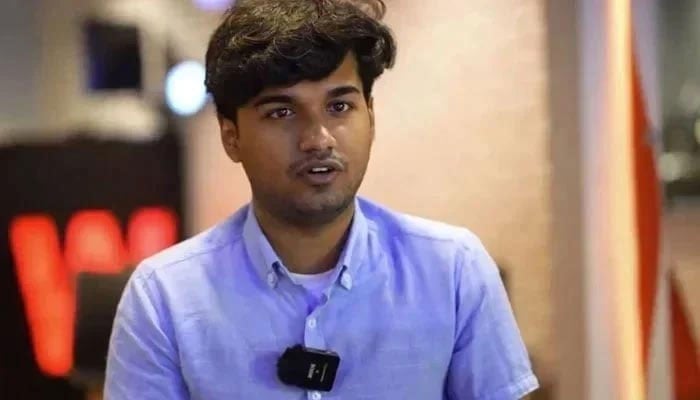
- Dr Sumaiya says she was followed by motorcyclists.
- Police surgeon says filed complaint with NCCIA over threats.
- Summaiya says public campaign being run against her.
KARACHI: Police Surgeon Dr Summaiya Syed on Monday told a judicial commission, formed to investigate the death of businessman Mir Raza Ali, that she was threatened and followed by men on motorcycles for two days.
Raza, an IBA graduate and businessman, was found dead in Karachi's Gulistan-e-Jauhar a day after he went missing on July 28. His father has consistently maintained that his son was murdered and has rejected suggestions that the death was a case of suicide.
At the outset of today’s hearing, the police surgeon apprised the commission that she was told that she would be treated “leniently” if she declared Ali’s death a suicide.
Dr Summaiya said that she had filed a complaint with the National Cyber Crime Investigation Agency (NCCIA) over the threats.
She said a public campaign was also being run against her, adding that she had put her career at stake over the case.
Referring to the threats, the police surgeon said that she was concerned about her family rather than herself.
Justice Omar Sial, who heads the commission, asked Dr Summaiya whether she needed security. She replied that she did not require police security.
At this, Justice Sial asked the police surgeon if she wanted Rangers’ security, but she declined the offer.
'This is unacceptable'
Expressing his displeasure over the threats to the police surgeon, directed the focal person to inform the Sindh Chief Minister Murad Ali Shah and Home Minister Zia-ul-Hassan Lanjar that this was “unacceptable” to them.
In her statement, Dr Summaiya reiterated that Ali had a mark of injury on his head, a broken nasal bone and a mark indicating that a hard object had struck the back of his head.
She said the injuries were sustained while Ali was alive and that the decomposition of his face was different from that of the rest of his body.
The police surgeon said there were chemical burn marks on Ali’s body, including his hands and feet, while hydrochloric acid was found on his shirt.
She also said the chest wound had incorrectly been identified as the entry point of a bullet.
According to Dr Summaiya, the injuries indicated that a bullet had entered from the back, struck the heart and exited from the body. She said reports confirmed the entry wound was from the back.
The surgeon said she had seen a case involving chemical torture for the first time in her career.
She added that Ali had anaesthesia in his body when he was shot.
In its written order after today’s proceedings, the commission asked the additional secretary home to bring the complaints of the police surgeon to the knowledge of Sindh chief minister.
She told the commission that her family and residential address had been made public on social media.
The commission said that the police surgeon is an important witness in the case and noted: “It seems she is being targeted to intimidate her”.
It asked the NCCIA to immediately look into the complaint of the police surgeon.
During the previous hearing on September 10, the Sindh home minister apologised unconditionally before the judicial commission over the conduct of Advocate General Javad Dero during the previous hearing.
Earlier, the commission had suspended proceedings following the advocate general's intervention and ordered that a notice be issued to Lanjar.
Justice Sial had said the family had very little confidence in the investigation and criticised the advocate general's conduct during the previous proceedings, saying he had "added fuel to the fire".
He had said the advocate general's attitude had been disrespectful and explained that the purpose of summoning Lanjar was to restore public confidence in the investigation.
Justice Sial had also asked whether the Sindh government's vision was aligned with the commission's efforts to establish the facts surrounding Raza's death.
Lanjar had assured the commission that the provincial government was making efforts to ensure peace and justice in Sindh and had established the commission to restore public confidence.