CM Bugti voices support for creation of new provinces
New provinces should be formed on administrative rather than ethnic grounds, says Sarfraz Bugti
Published September 12, 2026
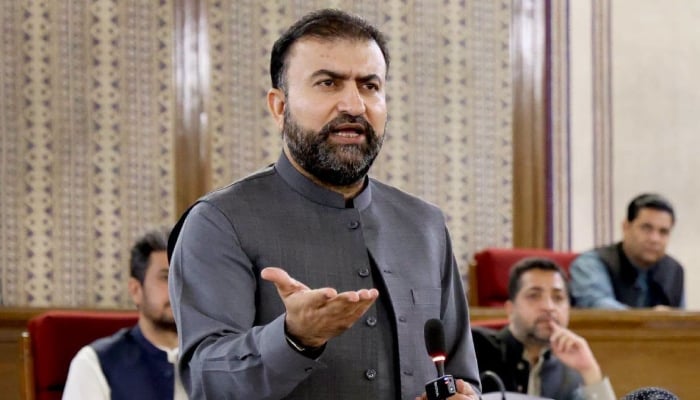
- Bugti says province cannot effectively govern from Quetta.
- Terrorism remains a nationwide security challenge: CM.
- New provinces or units debate ignited after Naqvi’s remarks.
Balochistan Chief Minister Sarfraz Bugti on Saturday voiced his support for the creation of new provinces on administrative rather than ethnic grounds, saying it was not possible to govern the entire province effectively from Quetta alone.
Speaking to journalists in Quetta, Bugti said any future provinces should be established on administrative considerations instead of linguistic or ethnic lines to improve governance.
Bugti's remarks come as discussions over Pakistan's administrative framework continue to gather momentum, with coalition partners the Pakistan Peoples Party (PPP) and Pakistan Muslim League-Nawaz (PML-N) holding differing views on the establishment of new provinces or administrative units.
The discussion began in July after Interior Minister Mohsin Naqvi described the governance system as having "collapsed" and called for structural reforms, including new administrative units with greater powers devolved to lower levels.
He later clarified he was referring to the system's decline over the past 80 years, not any specific government.
Bugti also said the country's civil and military leadership were united in their stance against terrorism, adding that there was no ambiguity or confusion over the state's policy.
He ruled out talks with those who take up arms against the state under any circumstances, stressing that terrorism was not an issue confined to a single province but a challenge facing the whole of Pakistan.
Earlier on September 6, Geo News, citing sources, reported that a high-level committee had submitted a draft proposal to Prime Minister Shehbaz Sharif for a 27-member elected assembly for the Islamabad Capital Territory, headed by a chief executive and supported by 27 administrative departments.
On September 5, the interior minister stood by his earlier assessment that the system had been "completely destroyed", while clarifying he was referring to its deterioration over the past 80 years rather than any particular government.
Naqvi said the creation of new administrative units should be based on the people's wishes, describing the moment as requiring a system reset.
"Reset does not mean breaking down the system. Reset means making wrongs right," he said, adding that work on new administrative units would only proceed if backed by the people of Pakistan.
The debate subsequently widened when Planning and Development Minister Ahsan Iqbal called for a national discussion on Pakistan's administrative structure and proposed 12 to 15 provinces.