Fixing financial reporting
Modern public financial reporting requires specialist accountants, auditors, actuaries and valuation experts
Published August 26, 2026
This is the fifth and final article in a series on Pakistan's broken public financial reporting system. The first asked why parliament approves new budgets without audited actuals. The second examined a system in which many institutions handle government numbers but no one clearly owns them. The third argued that the finance minister and the cabinet must take responsibility for year-end financial statements. The fourth asked an even more basic question: what does the state own and what does it owe?
Taken together, they point to a problem larger than any single institution. Pakistan does not simply suffer from weaknesses in budgeting, accounting, audit or parliamentary scrutiny. It has never built a complete financial reporting system in which the executive accounts for the money it receives and spends, an independent auditor gives credibility to those accounts, Parliament scrutinises them, and the law ensures that all this happens on time. That is the system Pakistan must build to maintain public trust in the state.
Pakistan still relies principally on cash-based government accounts prepared under the New Accounting Model. Whatever its historical contribution, the model does not provide the quality of information now required about government revenue, expenditure, assets, liabilities and overall financial position. The starting point should therefore be formal adoption of a credible, internationally recognised framework: the International Public Sector Accounting Standards, or IPSAS, with a realistic and legislated transition from improved cash reporting to accrual-based financial statements.
But better accountability need not wait for full accrual accounting. Parliament should be able to see, in one place, the original budget, supplementary appropriations, final authorised amount and audited actual outcome, with significant differences explained. This is broadly the discipline required by IPSAS 24. Today, anyone trying to understand what government actually spent may have to move between budget books, revised estimates, appropriation accounts, fiscal operations and audit reports – documents produced for different purposes and rarely reconciled into one authoritative picture. That should end.
At the same time, Pakistan needs to start building a government balance sheet. The first step is not to attach heroic valuations to every national resource. It is to undertake a serious census of public assets and liabilities. Federal and provincial governments should identify the land, buildings, roads, bridges, irrigation systems, dams, rail infrastructure, financial assets and investments they own or control. Interests in state-owned enterprises and autonomous bodies should be reconciled. Arrears and guarantees should be recorded, and pension obligations actuarially valued.
Natural resources require more judgement. Rivers, coastlines, forests, groundwater and mineral deposits do not automatically qualify as government assets merely because they lie within Pakistan. Ownership, control, rights and reliable measurement matter. Where recognition is not appropriate, meaningful disclosure may still be necessary. The purpose is not to manufacture an impressive national net-worth number but to establish financial reality.
Even the best standards and valuations will achieve little unless someone owns the accounts. Government financial statements are management’s assertion. In the corporate world, management prepares the accounts, the board approves them and the auditor independently examines them. Government should be no different. Principal accounting officers should take responsibility for departmental balances. The finance secretary should certify the reporting process and underlying controls. The finance minister should sign the annual financial statements after cabinet approval and authorisation. The same framework should apply in every province.
That also requires completing the separation between accounting and audit. The controller general of accounts and accountant general offices continue to be staffed substantially through the Pakistan Audit and Accounts Service, from which the auditor-general's organisation also draws personnel. This legacy arrangement no longer makes sense. Accounting is an executive function. The CGA and provincial accountant general functions should become professional accounting arms of the Finance Division and provincial finance departments. Audit must remain institutionally separate from those responsible for preparing the accounts.
The auditor-general's department must also evolve. Pakistan unquestionably needs compliance and operational audits — unauthorised expenditure, procurement violations, waste and misuse of public money all deserve investigation. But Parliament also needs something more fundamental: a clear audit opinion on a complete set of annual financial statements.
Can these accounts be relied upon? That question should sit at the centre of public-sector audit. Answering it requires modern financial-statement audit methodology, strong quality assurance and the professional ability to deal with material misstatements, asset valuations, pension liabilities and consolidations. The extraordinary aggregation error in the auditor-general’s 2025 consolidated report should be treated as a warning of how badly quality control needs strengthening.
This leads to perhaps the most neglected issue of all: people. IPSAS cannot be implemented by issuing standards and sending generalist officers on short courses. Modern public financial reporting is specialist work. The Finance Division, provincial finance departments, CGA, accountant general offices and the auditor-general all need professionally qualified accountants, auditors, actuaries, valuation specialists and public-financial-management experts in permanent positions.
Pakistan's traditional civil-service model, under which officers rotate every few years through unrelated assignments, is poorly suited to such work. Countries that successfully moved to accrual accounting built specialist capability; New Zealand, for example, recruited professional accountants into government as part of its public-sector reforms. Pakistan will need the same, including lateral recruitment — expertise that takes years to acquire should not be excluded from government merely because it was developed outside the civil service.
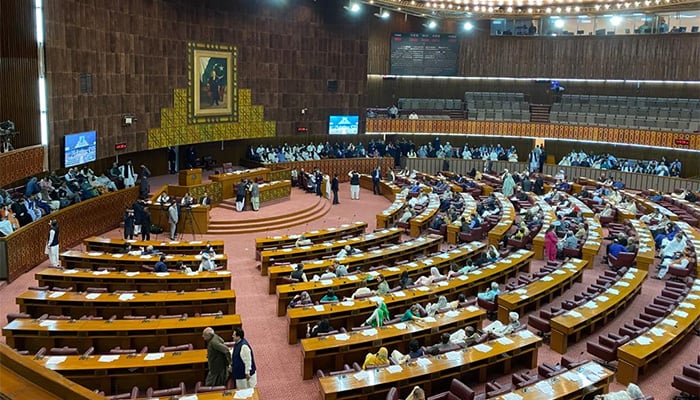
Then comes parliament. The Public Accounts Committee should not spend most of its energy examining audit objections from years gone by. Its first question should be whether the accountability cycle itself has worked: were the annual accounts completed on time, did ministers own and sign them, did the auditor-general issue an opinion, and were the statements placed before parliament before the next budget? When these things do not happen, the failure should itself become a matter of public accountability.
Most importantly, parliament should not routinely approve another year's budget without seeing the audited outcome of the last completed year. Budget documents should show audited actuals for the previous year, revised estimates for the current year and proposed spending for the next. If audited actuals are unavailable, that should be stated prominently rather than obscured by provisional numbers.
The Public Finance Management Act 2019 can be strengthened to prescribe the reporting framework, define reporting boundaries, require annual financial statements, mandate ministerial certification and cabinet approval, and establish binding deadlines for preparation, audit, publication and parliamentary scrutiny.
The transition to full accrual reporting will take time. That is no excuse for postponing everything else. Improve cash reporting now. Reconcile budgets with actuals. Build reliable registers of assets and liabilities. Establish executive ownership. Separate accounting from audit. Professionalise both functions. Publish a genuine audit opinion. Give parliament timely accounts. Put deadlines into law.
Pakistan spends enormous political energy debating tax targets, deficits, debt and IMF programmes. But before arguing about how much more the state should collect or borrow, there is a more basic question: can it provide a timely, complete and independently audited account of what it has already done with the money?
Financial reporting will not solve Pakistan's economic problems. But without financial truth, accountability is impossible. No government should ask citizens for more taxes, lenders for more money, or parliament for another year's spending authority without first credibly accounting for the resources already entrusted to it. This should be the minimum obligation of an accountable government.
The writer is a former managing partner of a leading professional services firm and has done extensive work on governance in the public and private sectors. He tweets/posts @Asad_Ashah
Disclaimer: The viewpoints expressed in this piece are the writer's own and don't necessarily reflect Geo.tv's editorial policy.
Originally published in The News