When will air quality improve? Experts predict duration of Canadian wildfire smoke crisis
Wildfire smoke blankets Northeast and Midwest, creating hazardous air quality for 115 million Americans
Published July 16, 2026
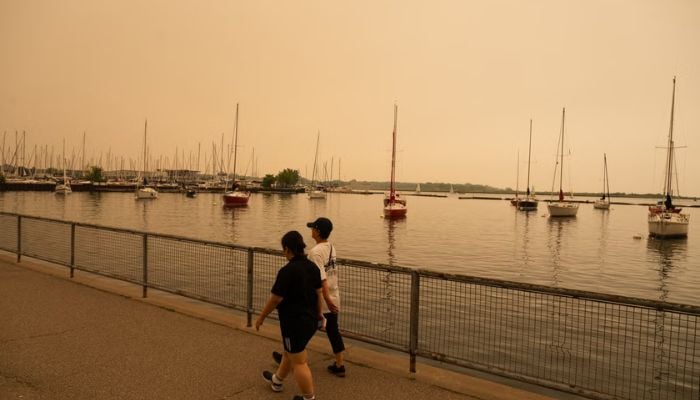
A thick blanket of smoke from more than 850 active Canadian wildfires continues to choke the Midwest, Northeast, and Mid-Atlantic.
This puts 115 million Americans’ health at risk, wondering when air quality will finally improve.
As of Thursday, July 16, Detroit (518) is ranked as the worst air quality index in the world, while Minneapolis, Chicago, New York, and Washington have 369, 213, 109, and 62, respectively.
Cities including Rochester, New York, Boston, and Toronto are continuously under the “unhealthy” to “hazardous” conditions. Experts warn that the situation will not be relieved anytime soon.
When will air quality improve?
The weather forecasters reported that the smoke plume is expected to continue affecting the region through at least Friday. The Canadian Wildland Fire Information System reports 857 active fires nationwide, with 113 listed as “out of control” and 23 new fires igniting just today.
Smoke has covered several thousand miles, and according to satellite photos, a thick plume of smoke has been seen extending from the Upper Midwest region through the Great Lakes, south of Ontario, New England, and down to New York City. Smoke has even drifted out into the Atlantic Ocean.
What’s driving the crisis?
Canada is undergoing an increase in the frequency of wildfires due to high temperatures and a lack of rain. In terms of the fire threat this month, the regions with the highest risk of forest fires include the Northwest Territories, Nunavut, northern Manitoba, and Hudson Bay areas.
Since there’s no sign of improved air quality anytime soon, health officials suggests staying indoors, keeping windows closed, and using air conditioning with high-rated filters. Avoid unnecessary outdoor activities and, if necessary, wear N95 masks.
The Canadian government has announced that it is working closely with provinces and First Nations communities to support fire response efforts, but there’s no immediate end in sight.