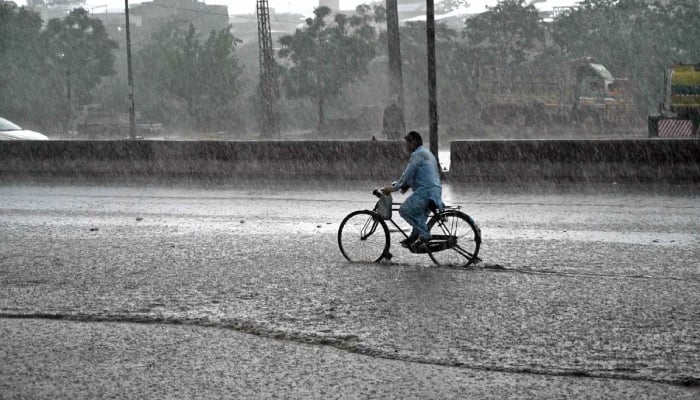
Authorities on high alert as monsoon rains threaten floods nationwide
NDMA urges tourists to avoid northern routes amid high risk of glacial floods, landslides
Published July 10, 2026
- Rising temperatures, heavy rain could trigger Glofs: officials.
- Glacial floods, landslides pose threat to northern parts.
- NEOC urges travellers to avoid glacial lakes, river channels.
The federal government has ordered a high-state of readiness amid increased risks of floods across the country during the ongoing monsoon season.
The development emerged during the Emergency Response Committee (ERC) meeting held on Friday at the National Disaster Management Authority (NDMA) headquarters in Islamabad, where participants reviewed and reinforced provincial and district level preparedness for monsoon 2026.
The committee moved to ensure a rapid, coordinated response to rising risks of flash floods, urban flooding, landslides, glacial lake outburst floods and other hydro-meteorological hazards by directing continuous readiness, timely implementation of local contingency plans, protection of vulnerable communities and rapid mobilisation of resources.
Planning Minister Ahsan Iqbal remotely chaired the meeting, with participation from Climate Change Minister Musadik Malik and NDMA Chairman Lieutenant General Inam Haider Malik.
The meeting received detailed briefings from provincial chief secretaries and disaster management officials on contingency planning, resource deployment and public awareness campaigns.
Officials highlighted focus on vulnerable flood plains, urban centres, hill torrent regions, coastal belts and glacier-fed valleys where the risk of flash floods and Glofs is elevated.
The committee directed all authorities to maintain a high state of readiness throughout the monsoon season.
It stressed uninterrupted inter-agency communication, swift resource mobilisation and immediate implementation of local contingency plans to protect lives, livelihoods and critical infrastructure.
Tourists advised to avoid northern routes
Separately, the National Emergency Operations Centre (NEOC) ordered tourists and non-essential travellers to avoid mountain routes from July 10 to 14, warning that sudden glacial floods and landslides pose an immediate, high-risk threat to northern parts of the country.
In an advisory, the NEOC said that landslide alerts cover July 11 to 13, while flood and river surge warnings apply across Gilgit-Baltistan, Khyber Pakhtunkhwa and Azad Kashmir until July 14.
Officials warned that rising temperatures and ongoing heavy rain could trigger Glofs, debris flows, sudden river surges and rockfalls in vulnerable glacial valleys and hill torrents.
NDMA named multiple high-risk zones including Badswat, Ashkoman, Hinarchi, Yasin, Khaplu, Hisper Hoper, Gultang and surrounding areas.
Authority also highlighted vulnerable roads such as Jaglot-Skardu, Hunza-Gojal and Gilgit-Ghizer, and routes to Naltar, Bagrot and Hermosh.
The NEOC urged travellers to avoid glacial lakes, river channels, known flood paths and landslide prone roads.
It warned that bank erosion and sudden debris flows could rapidly worsen conditions and instructed district administrations to mobilise emergency response teams and issue on-the-ground warnings.