PM approves auto policy 2026-31 linking incentives to exports, localisation
New framework projects $17.7bn in cumulative foreign-exchange savings through localised CKD assembly
Published September 10, 2026
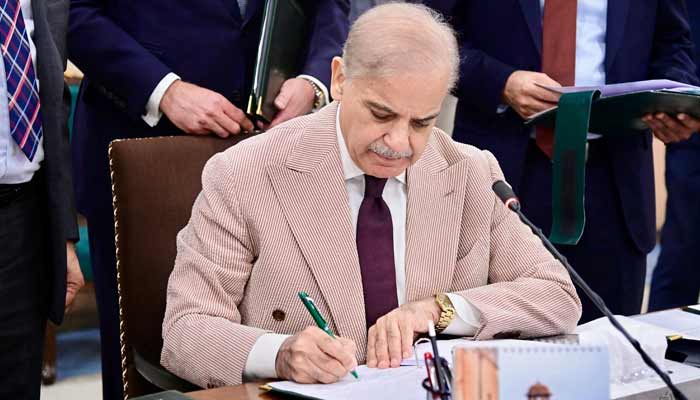
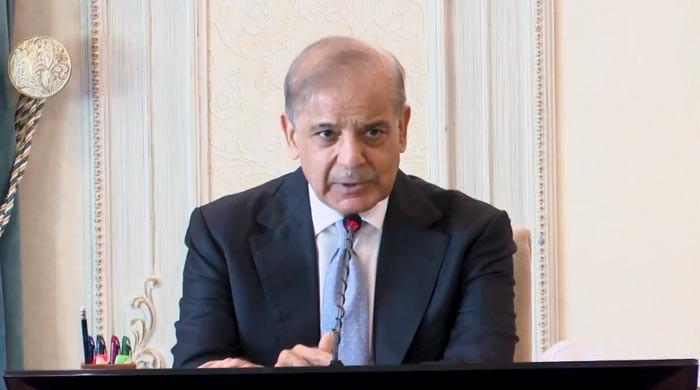
Prime Minister Shehbaz Sharif green-lighted Automotive Industry Development Policy (AIDP) 2026-31, linking incentives to exports, localisation and domestic value addition under the new framework, The News reported on Thursday.
The policy, developed by an inter-ministerial steering committee, will operate alongside the New Energy Vehicles (NEV) Policy 2025-30. It is intended to replace the previous framework, which expired on June 30, 2026.
The new framework projects $17.7 billion in cumulative foreign-exchange savings through localised completely knocked-down (CKD) assembly and $4.586 billion in vehicle and auto-parts exports over five years. It also targets the protection of 2.5 million jobs and a net fiscal surplus of Rs21.11 billion.
The policy proposes a simplified four-tier customs structure of 0%, 5%, 10%, and 15%, reducing the weighted-average import tariff from 15.7% to 5.99% by 2030.
Customs duties on completely built-up (CBU) vehicles will be reduced gradually by fiscal year 2030-31, with rates reaching 35% for vehicles up to 850cc, 40% for 851-1,000cc, 45% for 1,001-1,500cc, 77% for 1,501-1,800cc and 115% for vehicles above 1,800cc.
The duty on hybrid CBUs will fall to 15%, while NEVs will retain a flat 15% rate. Regulatory and additional customs duties will be eliminated by FY31. For CKD imports, duties on non-localised parts will fall to 10%, while those on localised parts will be reduced to 15%. Duties on raw materials will be eliminated.
The framework provides for an 18% general sales tax across vehicle categories. Green-vehicle incentives will instead be provided through direct subsidies under the Rs100.36 billion Pakistan Accelerated Vehicle Electrification (Pave) programme, funded through a 1-3% levy on internal-combustion-engine vehicles.
The policy targets a 30% share for electric vehicles by 2030. Localised NEVs will attract a 1% kit duty until June 2027 and will be exempt from federal excise duty.
Under the State Bank’s green auto-financing scheme, loan limits will be increased to Rs10 million, with repayment periods of up to seven years. Pave will provide direct subsidies of Rs65,000 for e-bikes, up to Rs400,000 for three-wheelers, and Rs15,000 per kWh for commercial fleets. The programme also envisages 3,000 public charging stations.
To curb low-value assembly, the Engineering Development Board will enforce a quantitative Minimum Domestic Value Addition (MDVA) regime. By FY2030-31, MDVA targets will reach 40% for passenger cars, 45% for light commercial vehicles, 80% for tractors, 90% for bikes and rickshaws, and 15% for NEVs.
Access to concessionary CKD duties will be linked to export performance. Passenger-car original equipment manufacturers will be required to raise exports to 12% of production value, equivalent to $596.1 million, by FY31. Firms failing to meet the targets will face customs penalties linked to their shortfall, while exporters will be eligible for rebates of up to 15% under the Duty Drawback of Local Taxes and Levies (DLTL) scheme.
Commercial imports of used vehicles up to five years old will be restricted to active corporate tax filers with 3S (sales, service, and spare-parts) networks. A 40% regulatory tariff will initially apply and will be phased out by 2030.
The framework also provides for the enforcement of 62 UNECE safety standards and the establishment of an Auto Parts Export Council. Following the prime minister's in-principle approval, the policy will be submitted to the Economic Coordination Committee and the Cabinet, with IMF reviews also forming part of the final approval process.