Naqvi doubles down on 'system reset', urges public's say on new administrative units
Security czar clarifies earlier remarks about "system collapse" were not directed at any particular party
Published September 05, 2026
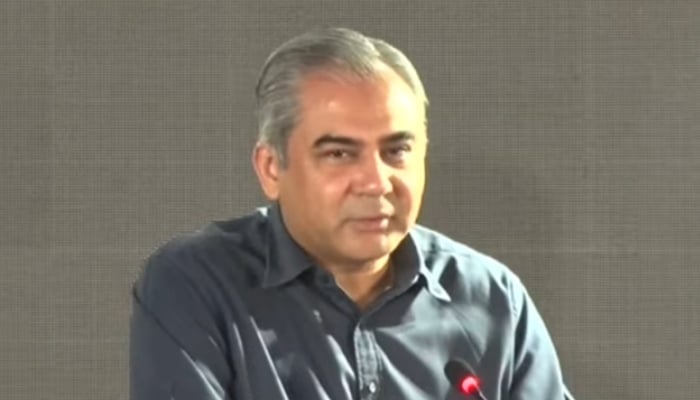
- Mohsin Naqvi backs making Islamabad separate province.
- Says new administrative units should not be ethnicity-based.
- Administrative division aimed at improving governance: Naqvi.
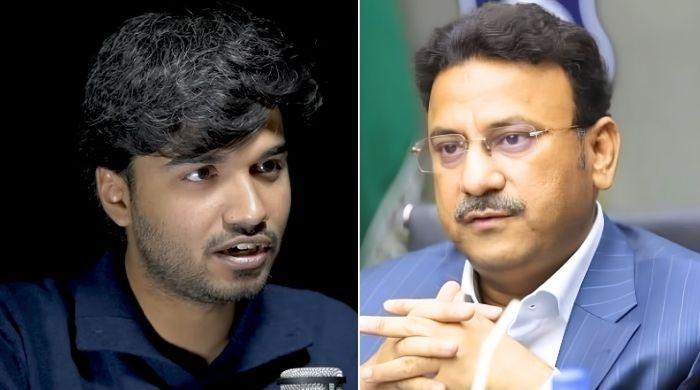
Interior Minister Mohsin Naqvi on Saturday said the creation of new administrative units should be based on the people's wishes, describing a system reset as the need of the hour.
"Reset does not mean breaking down the system. Reset means making wrongs right," he said, clarifying that his earlier remarks about the system's collapse were not directed at any particular party.
"If a company does not work, deliberations are held on how to make it work," he added.
The security czar said work on creating new administrative units would only proceed if backed by the people of Pakistan.
Naqvi's remarks come amid an ongoing debate over Pakistan's governance structure, with ruling allies the Pakistan Peoples Party (PPP) and Pakistan Muslim League-Nawaz (PML-N) appearing divided over the creation of new administrative units or provinces.
The debate triggered by Naqvi’s July remarks wherein he called the prevailing system “collapsed” and floated the idea of creating new administrative units to improve governance.
During today's statement, the interior minister said Pakistan needed to review and reset its system to address longstanding shortcomings and deliver better results to citizens.
"The administrative structure has lost its efficiency," he said, adding that the objective of a reset was to remove the flaws present in the system.
He said the country had produced many plans over 79 years, but the desired results had still not reached the public.
Naqvi stressed the need to understand the actual purpose behind calls for a reset, saying the purpose of resetting was "to make it better".
However, he assured that reforms would have to be carried out within the Constitution and law and through political consensus, saying the decision should not be made according to the wishes of a political party or an individual.
"The decision on establishing new administrative units should be made according to the will of the people of Pakistan," he added.
Naqvi said that new administrative units should be created if supported by the public and left unchanged if people opposed the move.
The constitutional right given to the public regarding new administrative units would have to be recognised, he added.
Referring to the prevailing governing structure, Naqvi said governments and policies kept changing, but the most important question was how much they delivered. "We keep making plans, but the most important thing is how much we deliver."
"This is not the result of one government; this is the result of 79 years," he said, referring to the country's failure to achieve the desired outcomes.
'Islamabad province'
Naqvi reiterated his support for making Islamabad a province, arguing that the federal capital deserved a stronger fiscal position.
According to the interior minister, Islamabad did not receive the National Finance Commission (NFC) award and received no money from the country's overall budget.
Naqvi said the federal capital presented a strong case if a new province was to be created. "If a province is to be made, Islamabad is such a case that we should all say yes to it."
He also made clear that his position on redrawing administrative boundaries would not change depending on whether he remained in office. "Whether I remain in this job or not, I will not back down from this."
He said there was no need for anyone to fear a decision based on the people's wishes.
Naqvi questioned whether a single bureaucrat could make decisions for a population of 70 million or 140 million people, saying it was not possible to run such a large system from one city.
Naqvi warned that a system in which higher population figures bring greater funding could create incentives for inaccurate population counts.
No ethnicity-based province
The security czar stressed that new administrative units should not be created on the basis of ethnicity or community, but to improve governance.
He maintained that creating southern or northern Punjab would not end Punjabi identity, while new administrative units in Sindh would not take away anyone's Sindhi identity.
"Quaid-i-Azam had made it clear that we are all Pakistanis," he said, adding that being Pakistani came before identifying as Baloch, Pashtun, Sindhi, Bengali or Punjabi.
He said that administrative division was not intended to increase the number of governments, but to improve the system of governance.
"The existing infrastructure will remain in place; only powers will be transferred to the lower level," he added.
He also called on parliament and the media to play their role in the debate over new administrative units.
Naqvi said maps or plans for new administrative units should not be finalised in advance, adding that no proposal should be predetermined.
He said any decision taken in the national interest should ultimately be accepted by everyone.
'unconstitutional interference'
Reacting to Naqvi’s fresh remarks on new administrative units in the country, the Pakistan Peoples Party (PPP) called the federal ministers’ statements “unconstitutional interference” in the province’s constitutional status.
The development came during a PPP meeting chaired by its Sindh chapter President Nisar Khuhro, read a statement issued by the party.
The PPP meeting strongly condemned the statements despite a resolution passed by the Sindh Assembly.
The provincial assembly on Thursday passed a resolution, firmly rejecting any proposal, plan, or constitutional arrangement aimed at “dividing” the province, altering its territorial boundaries, or creating new administrative units.
Expressing its displeasure, the Khuhro-led meeting urged Prime Minister Shehbaz Sharif to take notice of the ministers’ remarks and ensure such remarks were stopped.
The Bilawal Bhutto Zardari-led party, a key coalition partner of the PML-N at the Centre, is currently unhappy over the AJK elections and proposals to divide Sindh.
Separately, Sindh Local Government Minister Nasir Hussain Shah said that administrative reforms and the reorganisation of provinces were “two different matters”.
“Provinces are not merely administrative units; they have their history, identity, culture and language,” Shah added.
He said if the objective was to bring administrative powers closer to the people, it could be achieved under the existing Constitution.
Districts, divisions and tehsils can be created, and local government institutions can be empowered, he added.
Referring to the provincial assembly’s resolution, he said that the people of Sindh had already expressed a clear and unanimous view on their land, history and identity.
“The question of Sindh’s division is not merely an administrative proposal,” he said.
Shah said they were ready to discuss any positive proposal concerning reforms, while stressing that “there will be no compromise on the unity of Sindh”.
He urged Naqvi to “understand the sensitivity and importance of the matter”.