The wait for biopsy report
There is a peculiar kind of anxiety in waiting for a report that can determine what happens next
Published August 22, 2026
The surgery was performed last Monday.
It is now over. The procedure has been completed. The doctors have done what they needed to do. Yet, strangely, the most difficult part may still be the waiting.
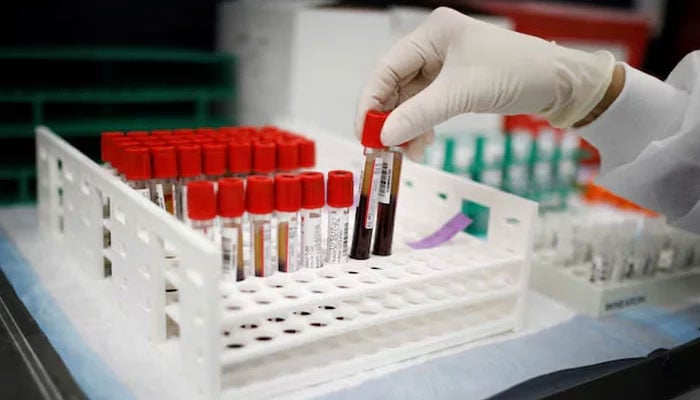
Waiting for the biopsy report. There is a peculiar kind of anxiety in waiting for a report that can determine what happens next. The mind keeps going back and forth.
Perhaps the report will be better than expected.
Perhaps the disease will turn out to be less aggressive.
Perhaps the doctors’ concerns will prove unnecessary.
Perhaps, despite everything we have been told, there will be a surprise.
Perhaps there will be a miracle.
We know what the doctors are saying. Multiple oncologists and urologists have already indicated that chemotherapy will likely be required and that there will be a few cycles of treatment.
We understand the medical reality. But parents are not very good at accepting realities when it concerns their children. A small corner of the heart continues to negotiate with Allah.
It keeps saying: “Ya Allah, maybe the report will be different.”
And perhaps that is not denial. Perhaps that is simply what hope looks like when a parent is afraid.
Sometimes, we even find ourselves wishing for the impossible.
That one morning, we wake up and discover that the entire thing was a bad dream.
The surgery.
The reports.
The consultations.
The word “tumour”.
The discussions about chemotherapy.
All of it.
Just a bad dream.
And then life goes back to how it was.
Cricket matches.
College classes.
Friends.
Arguments between brothers.
Ordinary problems.
The beautiful, boring normality that we never realised was such a blessing.
But then morning comes.
And reality is still there.
So we take another breath.
And move forward.
The boy, surprisingly, is doing relatively well. Perhaps better than his Amma, Baba and the rest of the family.
He has pain and discomfort, of course, after the surgery. But mentally, he seems to be holding himself together remarkably well.
He has his Xbox.
He plays games.
He talks.
He laughs.
He spends time with the family.
And every time we see him happy, even for a few minutes, it feels like a small victory. We find ourselves wishing that we could somehow preserve that happiness.
That he could remain this carefree for the rest of his life.
That the next few months would pass quickly and gently.
That his energy would return.
That his appetite would return.
That he would walk back onto a cricket ground and complain about his batting form as if none of this ever happened.
Perhaps one day he will because the difficult days will not last forever.
Treatment is a phase.
A painful phase, perhaps.
A tiring phase.
A frightening phase.
But still, a phase.
The goal is not to make the next few months perfect. The goal is to get through them.
And come out on the other side.
Before our son’s diagnosis, my wife and I would sometimes talk about parents who had seriously ill children.
We would wonder how they managed. How does a mother continue her daily life when her child is fighting a serious illness?
How does a father go to work, make decisions, pay bills, attend hospital appointments and still find the strength to smile at his children?
How do parents remain standing when everything inside them wants to collapse?
We used to admire their strength from a distance.
We would say that Allah must give such parents extraordinary strength.
Today, we understand that conversation differently.
Because now we are standing somewhere close to where those parents once stood.
And honestly?
It is tough.
Very tough.
You can go to work.
You can attend meetings.
You can talk to people.
You can watch television.
You can have dinner.
You can even laugh.
But somewhere in the back of your mind, there is always the disease. The mind keeps returning to it.
What will the biopsy say?
When will chemotherapy start?
How will he respond?
Will he be okay?
Will he be able to play cricket again?
Will his life return to normal?
You don’t necessarily speak these questions aloud. But they are there.
Every day.
Every hour.
Perhaps that is the hidden burden of illness.
The patient experiences the physical disease.
The family experiences the disease psychologically.
There is another reality that has become much more visible to us during this journey.
The cost of treatment.
Thankfully, our son’s medical treatment is covered through the medical benefits, which is an enormous relief.
But it has also made us think about families who do not have that protection.
What happens to a father who is already struggling to provide for his family and suddenly receives a diagnosis requiring surgery, repeated investigations and months of treatment?
What happens when the medical bill arrives at the same time as the emotional shock?
How does a family manage the cost of medicines, investigations, hospital visits, transportation and time away from work?
How does a mother manage when she has to choose between sitting beside her child and earning the money needed to pay for his treatment?
Illness is difficult enough.
Financial uncertainty can make it devastating.
We have realised that access to treatment is not only a medical issue.
It is also a social issue.
A family should not have to choose between saving a child’s life and protecting its financial survival.
We are fortunate in this regard, which makes us think even more deeply about those who are not.
Perhaps every family going through something similar deserves not only medical care, but also compassion, support and dignity.
For now, we are waiting.
Waiting for the report.
Waiting for clarity.
Waiting to know exactly what lies ahead.
The mind wants answers immediately.
The heart wants good news.
But some things are simply beyond our control.
So, we pray.
We trust Allah.
We stay close to our son.
And we try not to let tomorrow steal today from us.
Today, he is playing Xbox.
Today, he is smiling.
Today, he is recovering from surgery.
Today, he is here with us.
And today, that is enough.
Perhaps resilience is not about being fearless.
Perhaps resilience is being afraid and still moving forward.
It is waking up every morning knowing that something difficult lies ahead, and still choosing to face the day.
It is a mother wiping her tears and asking her son whether he wants something to eat.
It is a brother waiting for the day when the old fights return.
It is an uncle flying across the world to stand beside his nephew.
It is family members making duas.
It is friends checking in.
It is a young man playing Xbox after surgery and thinking about cricket.
It is all these small things that somehow give a family the strength to continue.
We don’t know exactly what the biopsy report will say.
We don’t know exactly how difficult the next few months will be.
But we know that we will face them when they come.
And we keep reminding ourselves:
Treatment will end.
The difficult days will pass.
Strength will return.
Life will find its rhythm again.
And one day, Insha’Allah, this period will become a story we tell about how our family came together, how our faith carried us, and how an 18-year-old boy fought his way back to the cricket ground.
Until then, we wait.
We pray.
We hope.
And we keep believing that, somehow, things will be alright.
InshaAllah!
The writer is Director HR at Geo News