US-Iran war: Who won and who lost, so far?
In war, whichever side may call itself the victor, there is something that it wins while losing another
Published August 21, 2026
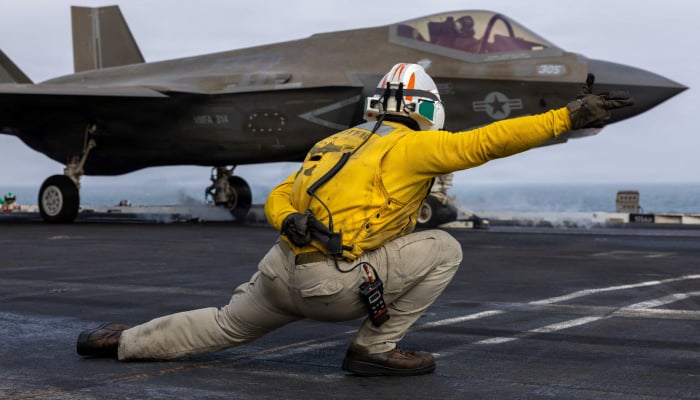
The US-Iran ceasefire on paper has ended without an extension or resumption of war. The question is who is the winner and who is the loser?
Former British prime minister Neville Chamberlain, who had witnessed the First World War, famously said: “In war, whichever side may call itself the victor, there are no winners, but all are losers.”
But this was a political statement. He himself had popularised the term ‘Peace through strength’, an ideology introduced by a Roman Emperor and adopted by President Trump.
As a matter of fact, in war, whichever side may call itself the victor, there is something that it wins while losing another.
So, there should be a continued comparative analysis of the impact of war. Let’s first focus on the stated objectives.
US objectives and stated goals
President Trump had incited Iranian people to overthrow the ruling Khamenei leadership. To achieve that aim, the US and Israel assassinated Ayatollah Ali Khamenei. However, his son, Mojtaba Khamenei, has grip on power far beyond what his father wielded in his last days.
Thanks to President Trump, the dissenting voices are muted. Iranians who took pride in protesting on the streets are replaced by the ones chanting slogans of revenge.
The United States declared that it had launched strikes to ensure that Iran was permanently blocked from obtaining or completing a nuclear weapons programme. But even the IAEA chief has admitted that there is no military solution to Iran’s nuclear ambitions.
President Trump wanted to completely destroy Iran’s existing ballistic missiles and its industrial capacity to manufacture new ones. A devastating attack on Jordan on July 18 shows that Iran retains its sophisticated firepower.
The United States wanted to destroy Iran’s naval forces to eliminate its ability to disrupt regional waters. Well, if Iran’s navy is gone, why is President Trump not declaring the Strait of Hormuz as a US territory?
Washington also vowed to permanently end Iran’s ability to arm and fund regional proxy groups outside its borders. However, we witness Houthis blocking Bab al-Mandab Strait, Iraqis bombing US bases and Hezbollah launching strikes on Israel.
The Trump administration equally promised to provide defence and security for key regional allies, specifically naming Israel, Saudi Arabia, UAE, Qatar, Bahrain, and Kuwait. In reality, missile defence systems failed to protect US bases and civilian infrastructure in these countries.
Objectives of Iran
As Iran was bombed by Israel and the United States, its first and foremost objective was to ensure that the clerical and political leadership survived and that there must be no revolution against the Islamic Revolution.
It failed to protect the supreme leader who was assassinated on the very first day of war. True, that in an unprecedented manner, Iran elected Mujtuba Khamenei to continue the legacy of his father and orderly replaced all top leadership assassinated by the enemy.
Iran had to defend sovereign borders to prevent any foreign ground invasion. Till now, it has done that quite successfully as we witnessed the wreckage of US helicopters in Isfahan. Tehran has equally protected its borders from separatist elements.
Tehran has also used the Strait of Hormuz as a nuclear weapon to safeguard its sovereignty. By closing the strategic waterway, Iran has stopped warships from coming close to its borders. This has also created an economic crisis, sending shockwaves across the globe.
For decades, Iran has heavily spent on its Axis of Resistance. They are Hezbollah of Lebanon, Ansar Allah of Yemen and a number of armed groups in Iraq and Syria. They are paying it back by becoming a double-edged sword.
The war has also brought China and Russia closer to Iran. On the other hand, major Nato and European allies of the United States resisted direct involvement in the war.
Regional Gulf allies had hardly faced collateral damage for giving bases to the United States. Failing to hit the mainland USA, Iran aggressively targeted almost all countries that reportedly served as the launching sites for missiles and drones.
Iran also damaged the US economy. Before the war, the price of oil in the USA was $2.98 per gallon. It peaked above $6 per gallon. Still, the national average is above $4 per gallon. It has made this war unpopular in the USA.
After launching the war on 28th February, President Trump had claimed that Operation Epic Fury would be over in a few days. Iran proved it as strategic miscalculation. Tehran has prolonged the war, knowing well that Americans only want a quick victory.
In retrospect, Iran has virtually achieved all its stated objectives. Yet, we will come back to point one before the conclusion.
Military, financial, and human loss comparison
There is no doubt that Iran lost far more than the United States and its allies combined.
According to a report presented in Congress, Iran and its regional proxies lost 3,375 people. A number of airbases, ports, nuclear, manufacturing and energy facilities, hundreds of jets and one hundred thousand residential or commercial buildings were badly damaged.
America lost 13 servicepersons, and 26 persons were killed in Israel. In addition to American casualties, 28 civilians of different nationalities, including four Pakistanis, were killed across Bahrain, Saudi Arabia, UAE, Qatar, Kuwait and Oman.
The United States spent over $113 billion on war, and its economy suffered losses worth over $132 billion. Dozens of fighter jets and drones of repute were destroyed.
Damage to a billion-dollar-worth US radar system in Qatar was so intense that it might take a decade to rebuild it. The reason is simple. Complexity and scarcity of the hardware.
Ground reality
As the war hasn’t ended yet, it is too early to conclude who has won. However, one can safely say that the United States hasn’t won the war as yet. It hasn’t lost it either.
After all, the US has imposed a complete naval blockade of Iran and strangulated its economy. At the top of it, Washington has declared the Islamic Revolutionary Guard Corps a terrorist entity. It means the new supreme leader and the whole Iranian system is subject to attack with impunity.
On the other hand, despite Iran having humbled the superpower, it couldn’t win the war either.
First, it has failed to avenge the assassination of its supreme leader. Moreover, the United States has not left the region. Instead, Washington is heavily reinforcing and supplying military assets across the Middle East.
New regional alliances are also being formed. If Iran fails to join them, the window to keep attacking Gulf countries in retaliatory strikes may close fast. Or come with consequences.
In a nutshell, with limited military and economic power, Iran has so far survived the onslaught. However, there is every sign that the war will go on for months if not years.
Experts believe that had Iran entered into a joint defence mechanism with Russia, the US and Israel would have considered twice before even launching the war.
The author is Controller News at Geo News. He posts on X at @NasimHaider2 and can be reached at [email protected]