The little time Karachi has left
The port city struggles to cope with a population of nearly 20 million every day without any support
Published August 18, 2026
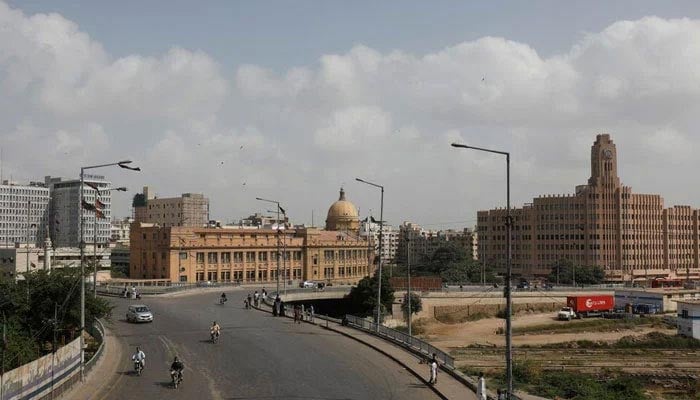
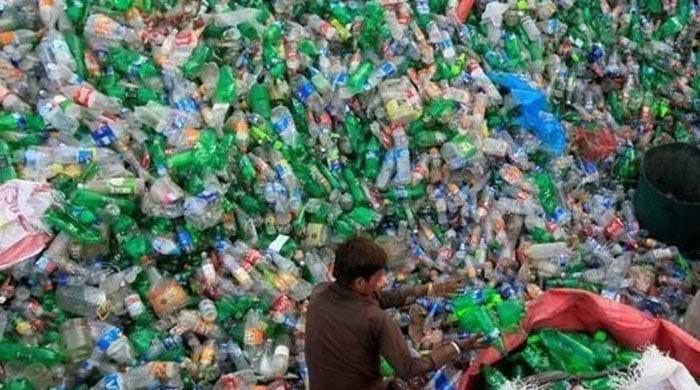
With every strained breath Karachi takes, its heart-rate monitor squeaks alarmingly as if to warn what one should always know — time is never promised. Its eyes groggily wander to its pale and brittle arms that are tainted with hues of orange and green, blending into an ugly colour as a young boy brutally slashes another tree. Black ink seeps through the gap between its toes as an angry man once again splashes hateful political slogans on its walls. It heaves and clutches its lower abdomen as a woman mercilessly throws a huge pile of garbage onto the street.
Out of breath, its hands move towards its head as it screams in agony when another katchi abadi is swept away by the brown rainwater that stinks of sewerage. It bangs its ringing ears as another man’s pleas not to have his livelihood snatched away are replaced by a loud gunshot. Shivering, screaming, suffering — Karachi lies on its deathbed alone as the doctor enters the room in a rush but unsurprise, “You’ve got very little time left, Karachi”.
It is no secret that Pakistan’s biggest city has been left to fend for itself. Like parents who emotionally self-destruct when they have too many mouths to feed, Karachi struggles with its 1.81 crore population every passing day without any support. With new housing projects and crammed buildings emerging in every nook and cranny of the city, Karachi struggles to cater to its growing population. And for those who aren’t catered to by these projects — they make their own slums next to highways or expressways. They compromise their lives for shelter, something that a city must promise its residents.
As Karachi struggles with its deteriorating health, it looks somberly upon the crime rate that keeps following an upward trend. Street crime, theft, mugging, target killings, violence — everything alarming keeps growing at an unprecedented rate with little to no accountability for the perpetrators. The citizens of Karachi breathe fear. They are the living embodiment of adrenaline as paranoia courses through their veins every time they are on the streets — exposed and like prey, waiting to be hunted by those lurking nearby. The statistics are grim and the livelihoods of thousands of people living in Karachi are at stake. People spend their whole lives creating and building something for themselves only for all of that to be snatched away at gunpoint, perhaps even at the cost of their lives.
Heaving a tired sigh and rubbing its eyes, Karachi groans and clutches its kidney in pain as it looks at the empty water cup near its bed. Water — a resource that citizens have to beg for. Karachi watches itself ironically as it drowns every monsoon season yet the taps in households run dry as citizens run around calling tankers to tend to the water scarcity. It shakes its head disappointedly at the aging infrastructure, the growing population, water theft, and how despite having received so much rain, no one is able to preserve it because of a lack of a proper system. It knows that water can be both a curse and a blessing.
As Karachi traces its veins that mirror the map of the city, it notices how every bend and pothole rattles transport vehicles, damaging them. There are perhaps very few roads in the city where people would not feel their vehicles excessively jostling and shaking. Most roads either have bumps or are broken while others have open gutter holes that not only damage vehicles but also put people’s lives at risk.
Shaking its head in disappointment, Karachi looks at the cars that speed past the signals and thinks, “Where do they want to go in such a hurry when I am the one who has so little time left?” It watches in amusement as the same cars get stuck in traffic ahead but also feels sympathy for them as it watches them stay stuck in the same place for more than two hours. Profanities and angry voices reverberate throughout the air on Sharea Faisal, University Road, Saddar, Gulistan-e-Jauhar, and every congested place with people rubbing their faces in exasperation and finding excuses to argue with each other. Funny, Karachi thinks, maybe being in traffic shows a person’s true colour and can be a good test of love.
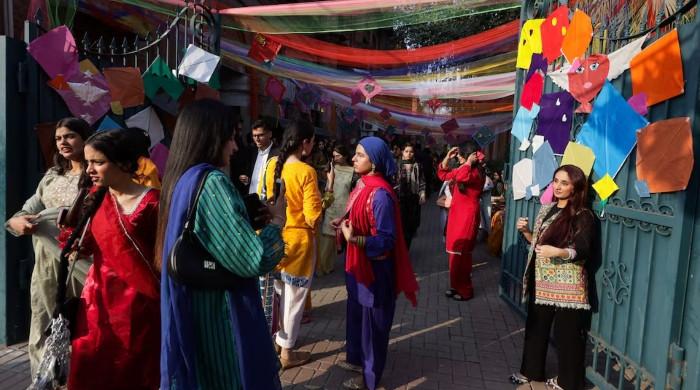
As the doctor leaves the room, Karachi sobs. It cries for all the times it has been cast aside, for all the pains it has suffered, for all the instances it's been neglected, for every time it tried to heal, only to be damaged by its very own people. Wiping its tear-stained face with its clammy hands and throbbing abdomen, Karachi gathers some strength and sits up straight. In the midst of all this pain and chaos, it looks at the yellow daisies and pink tulips next to its bed and it smiles. Because it remembers how its insomniac eyes have witnessed the beauty of a city that never sleeps — families giggling as they sit together at Dhoraji at 3am and eat golgappay and gola ganda. It remembers how, every time a citizen suffered an injury or fell on the road, everyone would come and help as if they were hurt themselves. It remembers Dhol walay standing outside extravagant banquets celebrating the joy of marriage. It remembers the beautiful emotions it felt — Khushi (joy), Muhabbat (love), Hansi (laughter), Itehad (unity) and other emotions that it cannot name.
With a small sigh of relief, Karachi reminisces about all the sweet memories it has and reminds itself that despite every problem that plagues the city, there is beauty and there is a story in every corner, in every person, in every street. It knows that there is still hope that it might recover someday, that it might get out of this hospital bed that it has been stuck in for a while, that the good may overpower the bad, and that it may heal.