


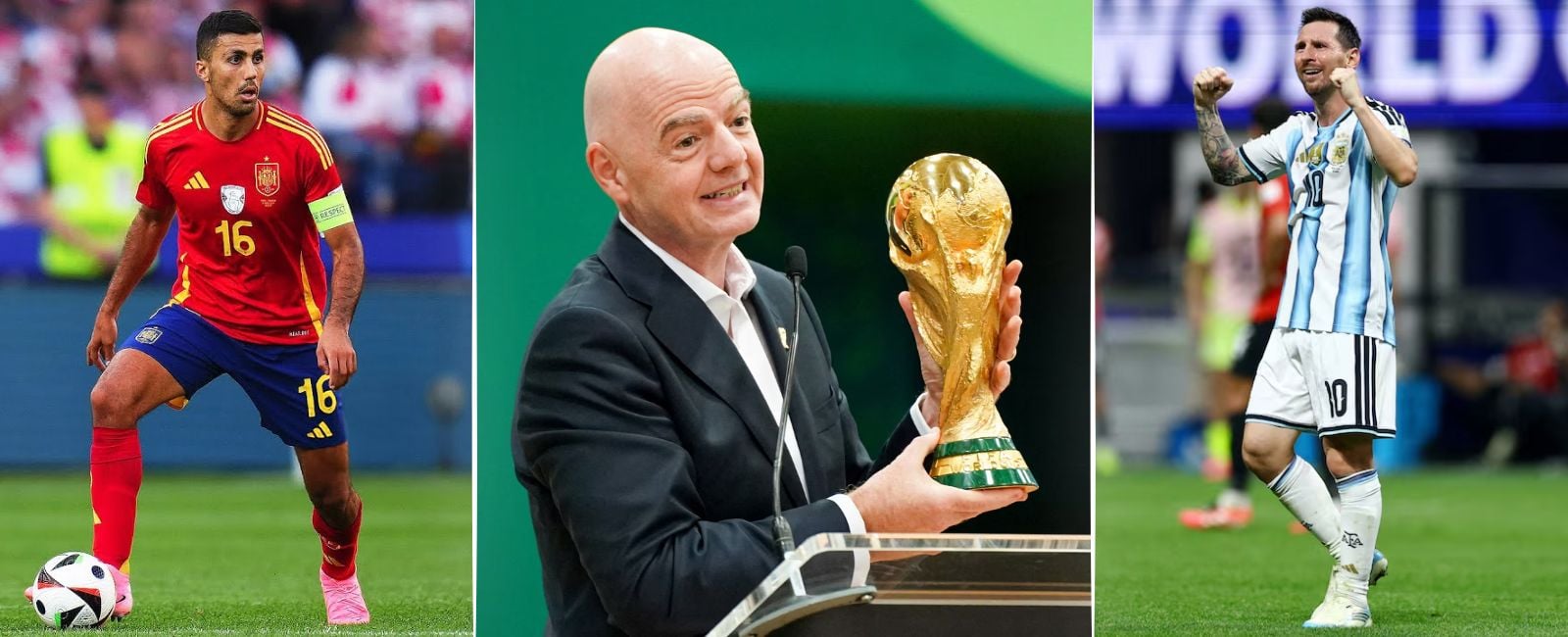
Beyond the pitch: How politics, money influence Fifa and future of football
By 2030, the football world will gather once again, as another chapter in the ever-expanding geopolitical arena unfolds in the game's colours




 Updated Sunday Jul 19 2026
Every four years, the citizens of the world get hooked on witnessing the beautiful game, which “Unites the World”. It’s like the clockwork of most parts of the world, which gets attuned to the schedule of the Fédération Internationale de Football Association (Fifa) World Cup football matches. The beautiful game, which happens to be “more than just a game, it's our DNA,” is reminded to the viewers across each match played through the official anthem of the Fifa World Cup 2026 by Andrea Bocelli, David Guetta, EJAE and Megan Thee Stallion.
Over the past few years, the grand sporting event has evolved into far more than a sporting event. To say that it is now perhaps a global spectacle with significant political, economic and diplomatic implications wouldn’t be wrong, as it is evident during the 90-minutes of play, where it is not only about players fighting for the ball to hit the net, but the game is now also impacted by political and economic pressures.
Geo.tv spoke to experts to understand the Fifa World Cup beyond the pitch and how football increasingly mirrors the international order.
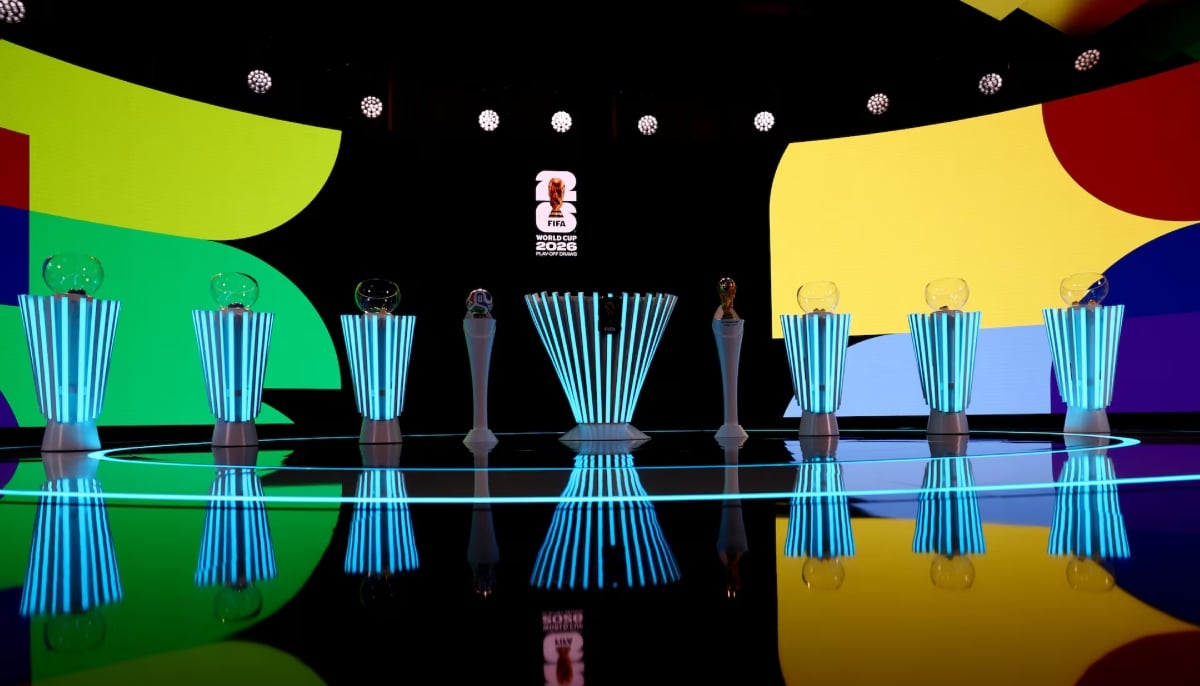
“The World Cup is the most popular event on the planet [not just in sports]. Everybody wants to bask in the glow of being at the centre of this,” Dr Stefan Szymanski, professor emeritus of kinesiology at the University of Michigan in the United States, puts it simply about the magic of the World Cup. “I don’t think there’s any doubt that both winning and hosting [the World Cup] bring a political boost,” he says. But the question is how long it lasts, as people have short memories, and the realities of life soon supersede the feel-good factor.
Professor Mark Pieth, the former head of Fifa’s Independent Governance Committee, shared an anecdote to explain how the game has evolved. “Football has nothing much to do with sports. It’s all about money, influence and power.” He narrated his conversation from around 2011-2013 with one of the Independent Governance Committee members, who happened to be the deputy head of Club Atlético Boca Juniors in Argentina, and a famous football official.
According to the Basel Institute on Governance, Professor Pieth had “to advise on the reorganisation of its [Fifa’s] governance” along with examining “the organisational structures and procedures and their abilities to deal with existing risks and challenges”.
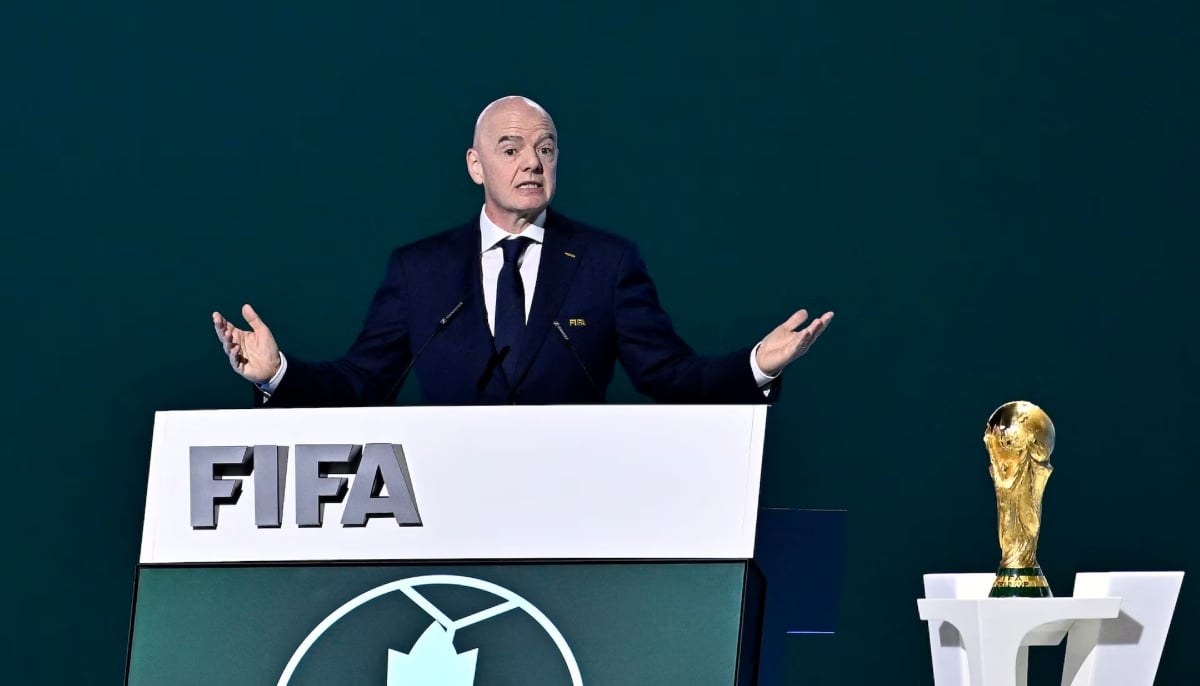
One wonders then whether Fifa’s governance has kept pace with the growing global influence on football? “I think one has to be fair and say there has been quite a step forward on paper, at least; a rule book that looks quite impressive. But when you think of what is actually the everyday life of this organisation, it’s a paper tiger,” shares Professor Pieth.
Speaking of the current Fifa president, Giovanni Infantino, the steps he took after assuming office, Professor Pieth states, “The first thing was he got rid of those independent professionals who were running the ethics and the audit committees. They were dangerous, so he had to get rid of them,” he speaks of the committee members who had “kicked out [Sepp] Blatter and [Michel] Platini. Speaking of the paper tiger, Professor Pieth mentions those who came in after the independent ones were shown the door, “do not fulfill the requirements of being independent and professional”.
Fifa – a governing body, global business or global political actor?
When it comes to controversies, the World Cup never seems to be short on them. Take the Fifa-Balogun-Trump episode for example, where one gets to witness the relationship between politics, global institutions and international sport all tested in an episode where, just like the rules-based order in international politics, rules for the strong(men) aren’t the same as rules for the rest.
In this episode, ‘geopolitical decisions’ were made on the field. Simon Chadwick, professor of AfroEurasian sport at the Emlyon Business School in Shanghai, speaks of it as a case which clearly is “almost unprecedented”. “It’s unheard of that a President would seek to influence an on-field decision in this way”. Mentioning the coverage that has resulted in the case, Chadwick says, “The Fifa panel, which considered the Balogun Red Card, consisted of one person. And that person was from the United Arab Emirates, and increasingly there are suggestions that that person didn’t make an on-field decision, or a good governance decision, but he was making a geopolitical decision”. This action, as per Chadwick, is “unprecedented — possibly even dangerous territory where we are beginning to see presidents influencing on-field decisions”.
And this sort of mirrors politics from the sports field to the trans-Atlantic theatre (case in point, Nato). “The divisiveness now between the Europeans and Trump and the Americans because of the Balogun ruling, and the way in which, you know, Belgium in particular were impacted by that,” so what about the football uniting the world formula?
Let’s now talk about the person at the helm of affairs who celebrates a decade in office as Fifa president – Infantino. On days, he is seen handing out the inaugural Fifa Peace Prize to US President Donald Trump, and on others, he’s answering calls by him to review the USA striker Folarin Balogun’s red card against Bosnia and Herzegovina.
Chadwick finds Infantino to be “quite a guy”. Speaking of his electric electoral manifesto, “which is essentially promised on making everybody richer”, Chadwick mentions Infantino’s promise to football. “This hyper-commercialisation of the tournament and of Fifa as a governing body is consistent with or is an outcome of his attempts to make this a much more financially prosperous organisation. He's going to make everybody in football richer.”
But Chadwick reminds us of Infantino’s experiment at a time when the world is amid a profound geopolitical change. “What this means is that if you're going to do business, you're going to do geopolitics at the same time, too. And what I find interesting about Infantino is what appears to be his personal willingness to engage in geopolitics.”
Chadwick wants the readers to time-travel to 2019 when Infantino was already playing geopolitics, but on a different continent. “What I find interesting is people saying Infantino’s got this relationship with Trump, he’s far too close, he goes to the US too often, they’re friends, and so on. But if you go back to 2019, the same thing was happening with President Xi of China. So Infantino was spending a lot of time in Beijing meeting Xi because I think the feeling at the time was that China would win the right to stage the 2030 Fifa World Cup,” shares Chadwick about a Fifa president who loves playing the sport of geopolitics. “I think that's out of necessity in one part, but I also think it's because he himself loves this.”
With Infantino’s cultivation of close relationships with leaders, one wonders whether that’s a preferred personal governance style of his or was it structurally built into what Fifa has become since the 2015 corruption scandal? According to Andrew Zimbalist, a Robert A Woods professor emeritus of economics at Smith College in the US, “Infantino has undermined Fifa’s reputation. His sycophancy is unbecoming, inappropriate and wasteful”.
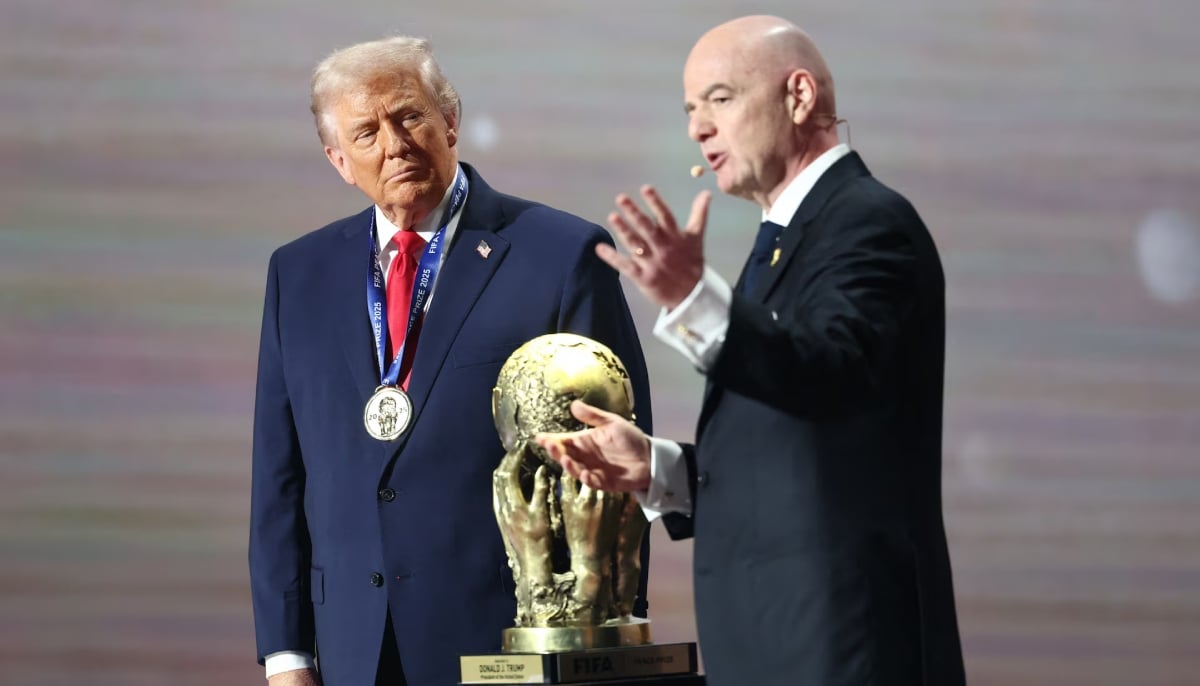
The World Cup remains a sporting competition, but it has also evolved into an exceptionally visible stage on which countries showcase their power, identity, competence, and international status. Dr Kenneth Holland, an adjunct professor of political science at the University of Utah, maintains that the World Cup transformed from a sports event to a geopolitical arena, with the host nation presenting a particular image of their nation to billions of people. “The first is the tournament’s unmatched global audience. Very few institutions can bring so many countries and citizens into the same conversation at the same time,” Dr Holland marks out one of the many forces that have driven the transformation of the beautiful game. “The second is the enormous financial and diplomatic importance of hosting rights. Governments now compete for the World Cup as much as they compete for international investment or influence within multilateral organisations.” And lastly, “there is an increasingly close relationship between Fifa’s leadership and national governments, which must provide security, infrastructure, visas, taxation arrangements, and political guarantees for the tournament,” Dr Holland mentions.
But can the perception of political influence be damaging to FIFA’s credibility? He believes so. “Yes, particularly for an institution such as Fifa, whose authority depends ultimately on trust. Appearances matter because sporting institutions must not only act impartially; they must be widely believed to be impartial. Every team must have confidence that the same rules will be applied to all teams,” says Prof Holland. And the football followers know how the rules and the way teams, like Iran, were treated were not the same for all. Then, the case of the Somali referee, Omar Artan, who didn’t get the visa.
Even if the rules are in place in a rules-based order, and in an organisation part of the Western-led order, certainly, rules alone don’t seem to protect an institution’s legitimacy, as Dr Holland mentions. “To preserve legitimacy, Fifa must demonstrate that its procedures cannot be altered — or appear to be altered — according to the political importance of the country involved.” And just like controversies surrounding other international institutions, Fifa is no different. “Are decisions governed by neutral rules, or does influence ultimately belong to those with the greatest political and economic leverage?” Dr Holland puts forward.
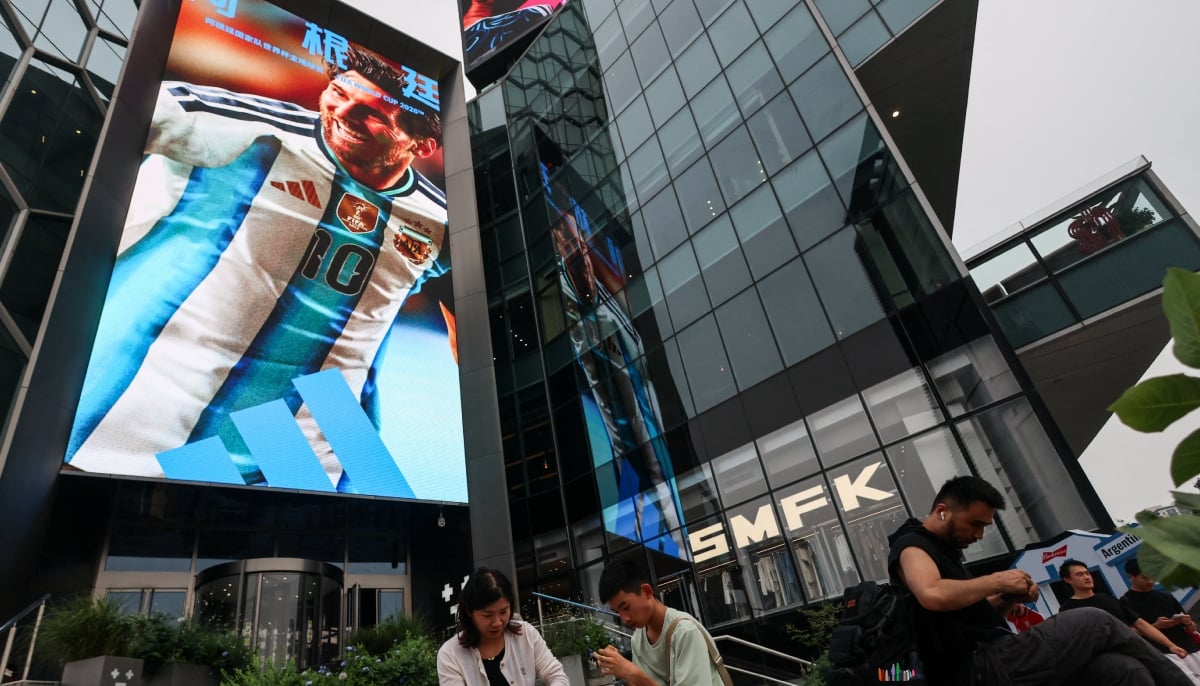
With countries which until recently were nowhere on the football map, and then hosting the World Cup in 2022, Qatar, there seems to be a change in the geography of football. Chadwick thinks there is a “pivot from the Global North to the Global South, what we're seeing is this morphing of the world in ways that I don't think that we necessarily anticipated”.
With sports acting as a soft power arm of states, what of autocracies, do they extract more soft power value compared to democracies when they host a tournament of this stature? “To say that countries are motivated to host mega-sporting events to build soft power is not to say that they actually accrue soft power or that hosting the mega event is the most efficient way to build soft power,” says Zimbalist. “I think the actual degree of success with soft power varies significantly from case to case. For instance, the world learned of Qatar's reactionary labour contracting system from the 2022 tournament. The world also saw enormous waste and tight restrictions on certain social activities. Did Qatar become a more desirable place to do business because of the 2022 cup? Zimbalist doesn't think so. He further expects there may be a trend 20 years from now, when the World Cup will be hosted mostly by wealthy authoritarian states able to absorb the losses, with democracies increasingly opting out.
As for governance challenges that Fifa could face in the next decade, and what reforms would be essential if it is to maintain public trust and institutional credibility? “You can only reform an organisation that wants to be reformed.” Fifa, according to Pieth, needs a “person with full integrity, who is actually open to reform, not just on paper”.
And so the fans — the people who give their hearts and souls to the beautiful game — will watch the final whistle blow, see the trophy lifted, and then begin the wait for the next World Cup. By 2030, the football world will once again gather around the game it loves, ready for another tournament — and another chapter in the ever-expanding geopolitical arena played out in the colours of football.
Mariam Khan is a journalist and communications professional working at the Centre for Excellence in Journalism, IBA Karachi. She can be reached on X @mariaamkahn
Header and thumbnail illustration by Geo.tv