'Pakistani-origin' suspect extradited to US in North Texas fraud, money laundering case
Abdullah Anwar, 28, brought to US after extradition from Qatar to face federal charges
Published July 14, 2026
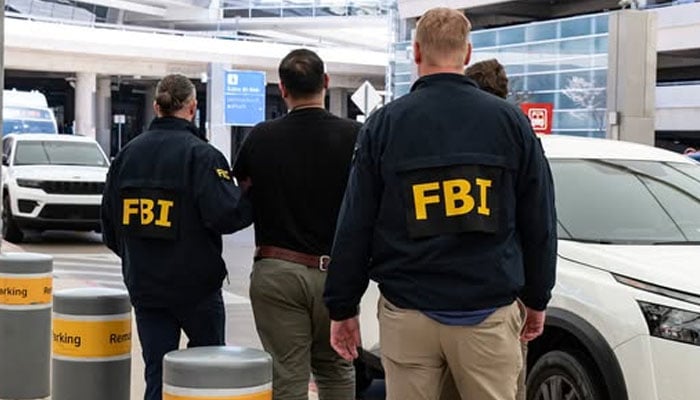
DALLAS: A 28-year-old man, reportedly of Pakistani origin, named in a sprawling case involving the alleged theft, fraud, overseas smuggling and money laundering of mobile phones, tablets, laptops and other high-value electronics in North Texas, has been transferred to a Texas jail by the FBI after being extradited from Qatar to the United States.
According to the US Attorney’s Office for the Eastern District of Texas, a federal grand jury had indicted Abdullah Anwar on charges of conspiracy to transport stolen property in interstate and foreign commerce, conspiracy to commit mail fraud, conspiracy to commit wire fraud, and conspiracy to commit money laundering.
Federal officials said Anwar had earlier been released on bond by a US court in connection with the case, but fled to Pakistan while the case was pending. He was subsequently arrested upon arrival in Qatar, and was transferred to the US under extradition on July 10.
He is currently being held at the Collin County jail. FBI officials said the Department of Justice’s Office of International Affairs, working with Qatari authorities, facilitated his arrest and extradition, and US officials specifically praised the cooperation of Qatar’s Ministry of Interior and Public Prosecution in the process.
The Justice Department identifies Anwar as a resident of Garland, Texas, whereas the original official listing issued in 2021 described him as a 24-year-old resident of Rowlett. Accounting for the passage of time, his current age would be 28, though neither press release explains the discrepancy in listed cities of residence.
According to information obtained locally, Anwar’s family is said to hail from Karachi, and he had resided in the Dallas area for a considerable period. Some acquaintances claimed they were themselves surprised by his alleged sudden financial rise and changing lifestyle.
FBI Director Kash Patel, marking Anwar’s extradition, said the accused was allegedly part of a money laundering network linked to losses exceeding $1 billion over a five-year period. He said the FBI’s broader investigation had uncovered operations producing fake identification documents, counterfeit or illegal device factories, transit and cargo theft rings, and other alleged criminal activity.
However, the 2026 official announcement did not clarify the basis for the $1 billion estimate, how many cases or sub-networks it encompasses, or how much of that figure is directly attributed to Anwar. The FBI has attributed this figure to the wider alleged network as a whole.
The case forms part of “Operation Cash Out,” a joint investigation involving multiple federal, state and local agencies. In August 2021, a federal grand jury named 101 individuals in a seven-count superseding indictment; according to the Justice Department’s current case page, the total number, including those added later, had reached 112.
Several defendants became cooperating witnesses. Prosecutors said the alleged organisation operated across several tiers, including individuals who obtained devices through armed robbery or fraud, suppliers who provided stolen or fraudulently obtained devices, alleged traffickers who purchased and moved the devices onward, and exporters who shipped the goods overseas.
According to US authorities, the alleged network sold more than 70,000 stolen mobile phones, tablets, laptops and smartwatches — valued at roughly $100 million — overseas, while approximately 20,000 devices were obtained through identity theft.
Officials said the operation caused more than $42 million in financial losses overall. As noted above, the FBI chief said the network has also been linked to losses exceeding $1 billion over five years, though further details on that figure have not been released.